

Stop throwing money away on rising rents and start building equity in one of Europe’s most stable markets. Buying a house in the Netherlands is a high-stakes financial move that requires speed, local knowledge, and a solid mortgage strategy to beat the competition in Buying a house in the Netherlands is a pretty safe bet. It is a notary-regulated process that tends to be the most reliable long-term financial move for the locals. Most of the time you’ll need a Dutch BSN, a steady income, and enough savings to cover about 5% of the purchase price to cover the closing costs. If you’re looking to make a purchase in 2026, you’ve really gotta line up a mortgage pre-approval before you even start looking at places and hire a buying agent (‘aankoopmakelaar’ in dutch) to help you navigate the crazy bidding climate.
Short answer: it’s a safe and legal process where the buyer has some serious protection under Dutch law.
Buying a house in the Netherlands involves navigating a complex property market with specific legal checks and ownership transfer rules. This guide breaks down the purchase agreement, the role of the notary, and the essential buyer’s costs (kosten koper). Whether you are looking for property in Amsterdam or in other cities, you must understand mortgage eligibility and interest rates to secure your future home. Start with a valuation report to ensure your investment is sound.
📈 The 2026 property market landscape
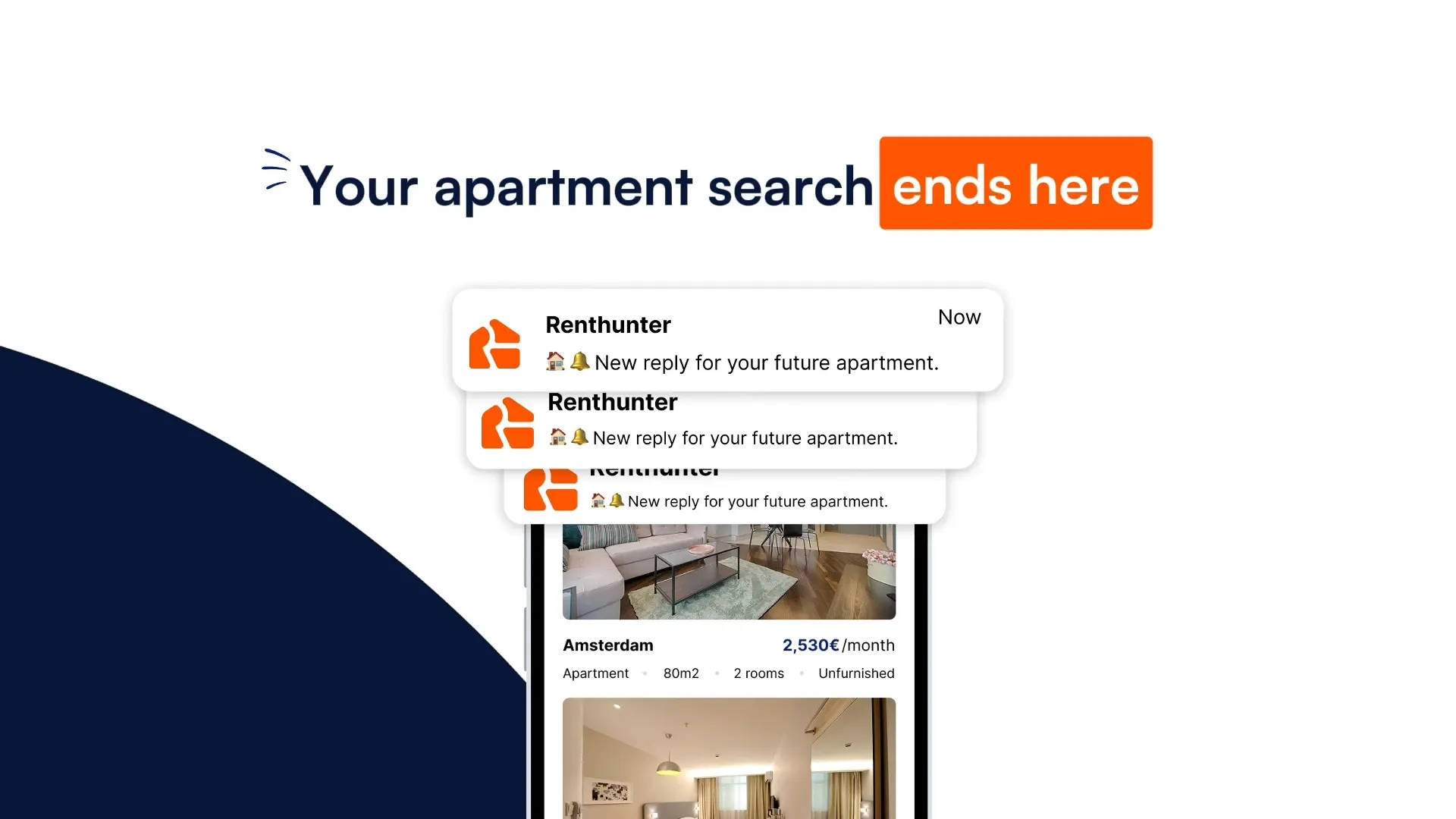
The 2026 property market landscape is looking pretty standard – the Dutch property market is still struggling with a housing shortage, keeping prices high and demand pretty steady. In 2026, the government is cracking down even harder on sustainability requirements – the energy label of a property will now directly affect not only your mortgage eligibility but even your final purchase price. If you’re in the market for a house in the Netherlands, be prepared to move fast – sellers usually expect the bidding process to wrap up in just a few days after the first viewing. Amsterdam may be the most expensive option but the regional price differences are pretty significant – places like Almere, Tilburg, and Groningen are offering some pretty good value for what you get. To get an idea of what’s out there and what you can expect to pay you could try out platforms like Renthunter.nl. This platform aggregates all the different trustworthy sources so you get a pretty good overview of the current market and what different price brackets offer.
🧭 Step-by-step: The route to homeownership
Buying a house in the Netherlands follows a strict chronological order that you must respect to avoid legal or financial penalties.
- Step 1: Financial assessment. You must consult a mortgage advisor to determine your maximum loan. In 2026, single buyers can often borrow an extra €17,000, and joint incomes of €70,000 can borrow approximately €6,000 more than in previous years.
- Step 2: Property search and viewing. Search online and use a buying agent. When you find a house, act fast. Check the foundations, roof, and energy label during the viewing.
- Step 3: The bidding process. Your bid should include the price, the desired transfer date, and resolutive conditions, such as a financing clause.
- Step 4: The purchase agreement. Once a bid is accepted, both parties sign the buying contract. You have a statutory three-day cooling-off period to cancel without reason.
- Step 5: Mortgage and valuation. You need a formal valuation report to finalize your mortgage. The bank will not lend more than 100% of the appraised value.
- Step 6: Ownership transfer. The process ends at the notary, where you sign the transfer deed and the mortgage deed. The notary then handles the registration at the Land Registry (kadaster.
💸 Essential buyer’s costs (kosten koper)
When you buy a house in Holland, you must account for “kosten koper” (k.k.). These are the costs on top of the purchase price, usually amounting to 4-6% of the house value. The law states that you cannot finance these costs with your mortgage; you must pay them from your own savings.
| Cost Item | Estimated Percentage/Fee | Mandatory in 2026? |
|---|---|---|
| Transfer Tax | 0% (Starters <35 up to €555k) or 2% | Yes |
| Notary Fees | €1,200 – €2,200 | Yes |
| Valuation Report | €650 – €950 | Yes (for mortgage) |
| Mortgage Advisor | €2,200 – €3,800 | Highly Recommended |
| NHG Commission | 0.4% (up to €470k house value) | Optional/Safe |
| Buying Agent | 1% – 1.5% of price | Highly Recommended |
🌍 Mortgage eligibility for expats and foreigners
Expats and foreigners have the same right to a mortgage as Dutch nationals, provided they meet certain criteria. If you are an EU citizen, the process is straightforward. For non-EU citizens, you generally need a residence permit marked “knowledge migrant” or a permanent residence permit. Mortgage interest rates in 2026 have stabilized at approximately 3.8% to 4.3% for 10-year fixed terms.
You must demonstrate a stable income. If you are self-employed, you usually need to show three years of accounts, though some specialized lenders may accept two years with a solid forecast. Remember that a higher energy label (A+++) can often get you a lower interest rate or a higher total loan amount because the government encourages sustainable living. In 2026, you can borrow up to €40,000 extra for an A++++ labeled home compared to a G-labeled one.
🧠Did You Know? : In the Netherlands, ground lease (erfpacht) is common, especially in Amsterdam. This means you own the house but not the land it sits on. You pay a yearly fee (canon) to the municipality. Always check if the ground lease is perpetual or when the next “reset” date is, as this significantly affects your monthly costs.
🛠️ Actionable Strategy: Which city fits your profile?
| Lifestyle Profile | Top Recommendation | Why? |
|---|---|---|
| Corporate Expat | Amstelveen / Haarlem | International schools, high safety, close to Amsterdam. |
| Young Professional | Rotterdam / Utrecht | Urban lifestyle, modern builds, better value than Amsterdam. |
| Growth Investor | Tilburg / Almere | Rapidly expanding hubs with high rental demand and lower entry prices. |
✅ Critical checklist: Before you sign
Do not sign a purchase agreement until you have checked every item on this list.
- Financing clause: Is it included with a realistic deadline (usually 6 weeks)?
- VvE Documents: Have you checked the “reservefonds” for planned maintenance in apartments?
- Energy Label: Is it verified as A or B to ensure lower mortgage rates?
- Technical Inspection: Did you check the state of the building?
- Land registry: Has the notary confirmed there are no “attachments” on the property?
- List of movables: Are you 100% sure what stays in the house (kitchen, floors, curtains)?
💡Tips : In the Netherlands, ground lease (erfpacht) is common, especially in Amsterdam. This means you own the house but not the land it sits on. You pay a yearly fee (canon) to the municipality. Always check if the ground lease is perpetual or when the next “reset” date is, as this significantly affects your monthly costs.
❓ FAQ: Frequently asked questions about buying a house in the Netherlands
How can I start buying a house in the Netherlands as an expat? The law states that you do not need Dutch citizenship, so you should start by securing a mortgage pre-approval and hiring a specialized buying agent to navigate the local market.
What is the process of buying a house in the Netherlands step by step? You must follow a strict sequence: financial assessment, property viewing, the bidding process, signing the purchase agreement, finalizing your mortgage, and the legal ownership transfer at the notary.
What is the total cost of buying a house in the Netherlands in 2026? In most cases, you must budget between 4% and 6% of the purchase price for “buyer’s costs” (kosten koper), which include taxes, notary fees, and advice.
Can I get a mortgage for expats Netherlands without a permanent contract? Yes, lenders accept a temporary contract with an “employer’s statement of intent,” provided you meet the income requirements for 2026.
Is buying vs renting in the Netherlands better for long-term residents? If you plan to stay for more than three years, buying is almost always more cost-effective due to equity building and mortgage interest tax deductions.
How does the property market Netherlands for foreigners look in 2026? The market remains highly competitive with a persistent housing shortage, making it mandatory to act quickly and use tools like Renthunter.nl to track aggregated listings.
What should I know about buying a house in Amsterdam as a foreigner? In most cases, property prices in Amsterdam are significantly higher than the national average, often requiring bids well above the asking price and careful checking of ground lease (erfpacht) conditions.
What are the primary requirements to buy a house in the Netherlands? You must have a valid BSN, proof of stable income, a residence permit (for non-EU citizens), and sufficient savings to cover the upfront closing costs that cannot be financed.
❌ Common mistakes made by buyers
The law states that you have a “duty of investigation,” and many foreigners fail because they skip the details.
- Bidding without a mortgage check: In 2026, sellers will ignore your bid if you don’t have a recent “letter of intent” from a bank.
- Ignoring the VvE: For apartments, a “dormant” VvE can mean you are hit with a €20,000 bill for roof repairs shortly after moving in.
- Underestimating k.k. costs: Forgetting that you need roughly 5% of the purchase price in cash will stall the entire process at the notary.
- Skipping the technical inspection: Even modern-looking houses in 2026 can have hidden issues with heat pumps or older foundations.
🎯 Conclusion: Securing your future home
Finding and buying a house in the Netherlands is not for the faint of heart, you really need to be disciplined and have some expert local advice on your side. By getting your finances sorted out early, getting a clear head on the buyer’s costs, and working with a good team (including a mortgage advisor and a notary) you can navigate the housing shortage with some real authority. Whether you’re an expat or a long-term resident the 2026 market offers a bit of stability – if you’re prepared to act fast you can find some real stability. Use tools like Renthunter.nl to stay on top of the market and make sure you don’t miss out on that perfect home.
Start your journey today by getting a formal mortgage assessment.
Next steps:
- Check our Moving Cost Calculator to estimate your total relocation budget.
- Create a shortlist of target neighborhoods and track price trends on Renthunter.nl.
- Hire a buying agent to start viewing properties immediately.
- Before searching for a house, read more about **House rent scams.**