





Securing a high-quality home in the Dutch rental market requires moving beyond social housing and understanding how the private market operates. For those with higher incomes or a need for immediate housing, vrije sector huur is the primary path to residency in 2026. Vrije sector huur refers to the non-regulated private rental sector where rental prices start above the 2026 liberalisation threshold of €1,228.07. It’s a genuine, legitimate and speedier choice for those who can’t get into social housing or are stuck waiting years on a really long list.
If you earn a steady income and need a roof quickly then you should be looking for a place in the private rental market.
Get your financial paperwork in order immediately to act fast on new listings. With significant 2026 housing market changes, you must distinguish between regulated social housing and the private sector. While the points system limits prices in the regulated segment, the vrije sector offers more latitude for both landlords and tenants. Given the persistent housing shortage, expats and professionals must understand rent regulations, income requirements, and legal protections against rent hikes. This guide explores the liberalised landscape to help you secure a rental contract that meets your needs.
📊 Understanding the Dutch rental sectors in 2026
The Dutch government categorizes housing into three distinct segments based on the Woningwaarderingsstelsel (WWS) or points system. In 2026, the boundaries have shifted to provide more protection for middle-income renters, but the high-end remains the “free sector.”
| Sector | WWS points | 2026 starting tent | Key feature |
|---|---|---|---|
| Social housing | 0 – 143 | Up to €932.93 | Strictly regulated; long waiting lists. |
| Mid-rent | 144 – 186 | €932.93 – €1,228.07 | Regulated price caps; for middle incomes. |
| Vrije sector | 187+ | Above €1,228.07 | Market-driven prices; no maximum cap. |
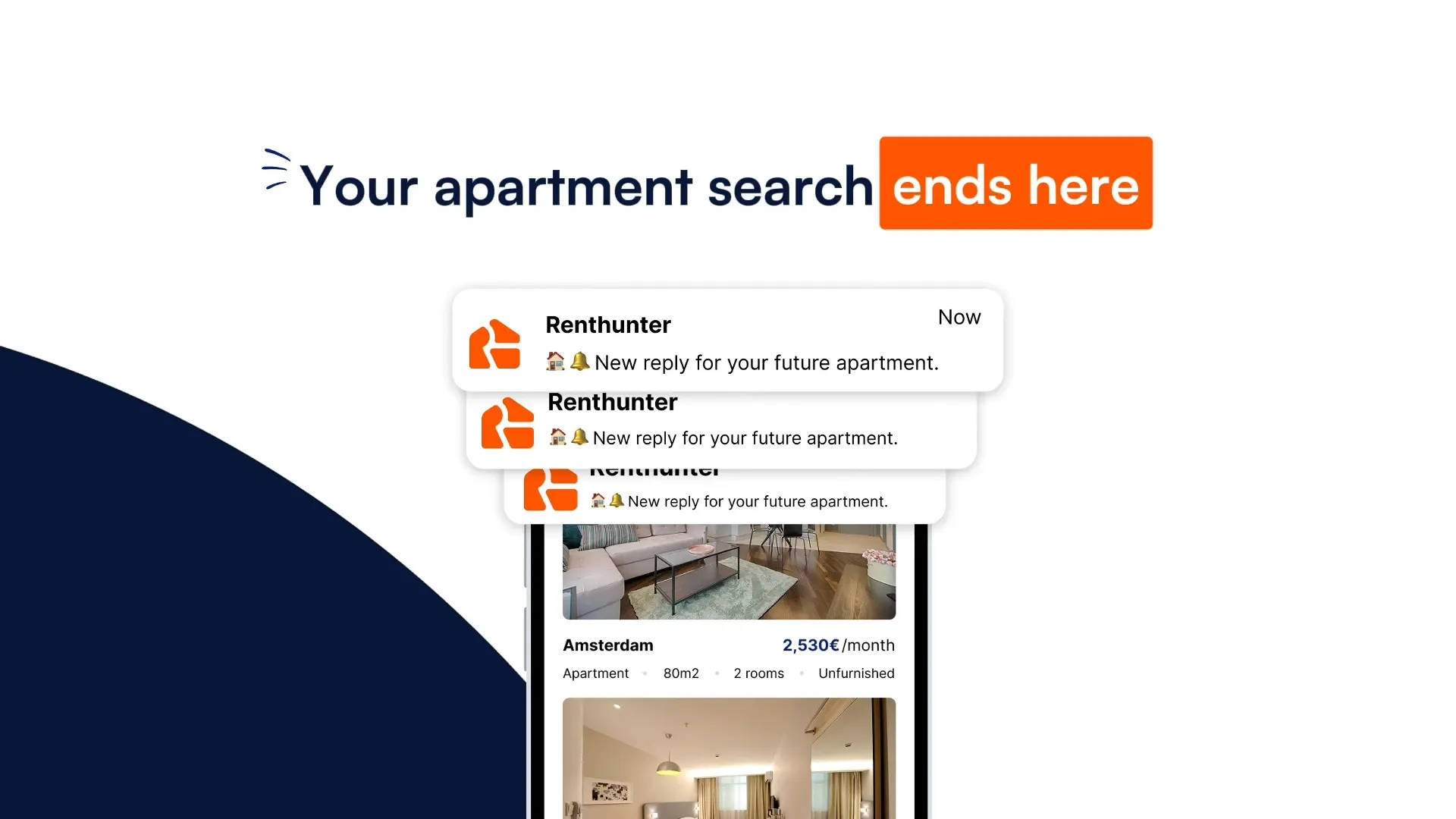
If you are a newcomer or a high-income renter, you will likely find yourself in the vrije sector. Unlike social housing, which can have waiting lists of over 10 years in cities like Utrecht or Amsterdam, the private rental sector is market-driven. This means that while prices are higher, availability is much more immediate. Platforms like Renthunter.nl or Funda.nl are essential here, as they aggregate listings from various private providers into one place, saving you hours of manual searching.
⚠️ Prevention/Warning : The housing shortage has led to an increase in “ghost listings.” Never transfer a deposit or “first month’s rent” via services like Western Union or to an international bank account before you have physically viewed the property and signed a contract. If a deal for a luxury apartment in the center of Amsterdam looks too good to be true, it is likely a scam.
⚖️ Vrije sector rent rules and protection
A common misconception is that “free sector” means “no rules.” This is incorrect. While there is no minimum rent threshold for the upper limit, the law provides significant protection for the tenant.
Rent increase caps in 2026
For the year 2026, the Dutch government has set a maximum rent increase for the private rental sector at 4.4%. This percentage is determined by taking the lower value between inflation and collective wage growth, plus 1%. Even in a liberalised rent agreement, your landlord cannot arbitrarily double your rent; they must stick to this legal ceiling.
The points system and liberalisation
The vrije sector points system explained simply: a property must earn at least 187 points to legally stay in the free sector. Points are awarded for:
- Total square footage of heated rooms.
- Energy efficiency (Energy labels A++ earn significantly more points).
- Quality of finishing (luxury kitchens, extra bathrooms).
- WOZ-value (the official valuation of the property).
If a property has fewer than 187 points, the tenant can technically appeal to the Huurcommissie (Rent Tribunal) to have the rent lowered to the regulated mid-rent level.
🌍 Vrije sector housing for expats and professionals
For international tenants, the private rental sector is often the only viable option. Social housing requires a housing permit and usually citizenship or long-term residency status that most newcomers don’t have.
Expats are often preferred by landlords in the vrije sector because they typically fall into the category of high-income renters with stable employment. However, income requirements are strict. In most cases, you must prove a gross monthly income of 3 to 4 times the monthly rent.
🧠Did You Know? : In 2026, the rules for “rent benefit” (huurtoeslag) have changed. Previously, you could not get any subsidy if your rent was in the vrije sector. Now, the hard rent ceiling for benefits has been removed, meaning even some private sector renters with lower incomes but high costs may qualify for a small subsidy, depending on their specific household situation.
📝 The rental contract: What to look for
In the private rental sector in the Netherlands, you will typically encounter two types of contracts:
- Indefinite contract: The gold standard. It offers long-term security with a minimum stay (usually 12 months).
- Fixed-term contract: Though restricted by new 2024/2025 legislation, these still exist for specific cases (like landlords temporarily working abroad).
Before you sign, ensure the contract specifies the base rent separate from service costs. In the vrije sector, the base rent must be above the liberalisation threshold at the start of the agreement.
💡Tips : When applying for a private rental, prepare a “Tenant CV.” Include your employment contract, a copy of your ID, and a brief introduction about yourself. Landlords receive dozens of inquiries within minutes; being the most organized applicant often secures the deal over someone offering more money.
✅ Checklist: Before you move in
Use this checklist to ensure your vrije sector huur is legitimate and safe:
- Verify that the starting rent is above €1,228.07 (or matches the points).
- Check your gross income meets the 3x or 4x rent requirement.
- Confirm the deposit is no more than 2 months of base rent.
- Ensure the landlord is registered as the owner via the land registry.
- Take photos of every room on move-in day to secure your deposit return later.
📍 Vrije sector vs social housing: A comparison
| Feature | Social housing | Vrije sector |
|---|---|---|
| Waiting time | 5–15 Years | 1–4 Weeks |
| Income limit | Max ~€52,000 | No Max (Min 3x rent) |
| Price control | Strict (Points) | Market-based |
| Best for | Lower incomes | Expats, Professionals |
❓ FAQ: Frequently asked questions: Vrije sector renting Netherlands
What is vrije sector huur exactly? It is a market-rate rental category where prices start above €1,228.07 (2026 threshold) and are not restricted by government-imposed rent caps.
How does vrije sector renting work for new tenants? You must find a property scoring at least 187 points on the WWS scale, prove sufficient income (usually 3-4x the rent), and sign a liberalised contract.
What defines the private rental sector in the Netherlands? The private sector consists of housing owned by non-subsidised landlords where homes are immediately available to those who meet the income criteria.
What is the main difference in vrije sector vs social housing? Social housing is subsidised for lower incomes with years-long waiting lists, while the vrije sector is market-driven and accessible to anyone with a higher budget.
Which vrije sector rent rules apply to price increases in 2026? The law states that your annual rent increase in the private sector is capped at a maximum of 4.4% for the year 2026.
What is the official vrije sector minimum rent in 2026? To qualify as a free-market property in 2026, the starting basic rent must be at least €1,228.07 per month.
How do I find vrije sector housing for expats in competitive cities? Use an aggregator like Renthunter.nl to track all major platforms and apply immediately with a pre-prepared rental file to beat the competition.
Why are vrije sector rental prices in the Netherlands so high? Prices are driven by the national housing shortage and high demand in urban hubs, allowing landlords to set rates based on current market value.
How is the vrije sector points system explained for checking my rent? The points system (WWS) uses factors like square meters and energy labels to verify if a home legally qualifies for the free-market segment.
❌ Common mistakes in the private rental sector
Newcomers often lose money or time by falling into these traps:
- Overpaying for “service costs”: Landlords cannot make a profit on utilities. You are entitled to an annual itemized breakdown of these costs.
- Ignoring the energy label: A “cheap” vrije sector apartment with a G-label will cost you hundreds more in monthly heating bills than a modern B-label apartment.
- Paying “agency fees”: If an agency works for the landlord, they are legally forbidden from charging the tenant a “commission” or “contract fee.”
- Searching only on one site: Use an aggregator like Renthunter.nl to see the full market. Focusing only on one big site means you miss out on smaller, professional property managers.
🎯 Conclusion: Mastering the private rental market
Finding a home in the vrije sector huur is the most effective way to beat the Dutch housing shortage in 2026. While the prices are higher, the speed and quality of housing available to professionals and expats make it the standard choice for those moving to the Netherlands. By understanding the points system, keeping an eye on the legal rent increase caps, and meeting the income requirements, you can secure a high-quality lifestyle in any Dutch city.
Stay proactive, keep your documents ready, and use technology to your advantage to win in this competitive rental market.
Next steps:
- Check your eligibility for subsidies: Use our Huurtoeslagcalculator to quickly determine if your income and rent price qualify you for a government contribution to your housing costs.
- Explore social housing options: Read our expert guide on the 7 steps to apply for social housing in the Netherlands if you want to understand the regulated market alongside the private sector.
- Beat the competition: Start your search on Renthunter.nl today to access aggregated listings from all major platforms and find your next home before other renters.