Apartments, rooms and studios for rent in Den haag

Stop refreshing, get daily matches
Stop refreshing, get daily matches
Den Haag at €1,789/month: what the numbers say
Den Haag is the seat of the Dutch government, home to the International Court of Justice, and the second-largest city in Zuid-Holland. That institutional weight shapes its rental market in ways you won't find in Rotterdam or Utrecht: a steady, year-round stream of diplomats, civil servants, international organization staff, and legal professionals keeps demand high even when student intake slows down. Based on over 44,400 listings tracked in Den Haag on RentHunter, the average rent lands at €1,789/month across an average surface of 80 m², with individual listings ranging from €200 to €9,750.
The market skews heavily toward apartments. At 74% of all tracked listings, apartments are the default product in Den Haag, a reflection of the dense urban fabric of neighborhoods like Statenkwartier, Benoordenhout, and the Archipelbuurt. Houses do appear, but at an average of €3,129/month for 156 m², they occupy a narrow, high-end segment. Rooms sit at the other end of the spectrum at €736/month on average, targeting the smaller but real student population clustered around The Hague University of Applied Sciences and Leiden University's campus presence in the city.
One price comparison stands out: Den Haag averages 31% more than nearby Delft, where the market sits around €1,440/month. For renters with flexibility on commute time, that gap is significant. The 16% of listings explicitly marketed to expats also signals a dual-track market: international-standard furnished flats on one side, tighter Dutch-standard rentals on the other.
Den Haag's rental structure: apartments dominate at 74%
The market here is not evenly distributed. Apartments crowd out every other type, and prices stretch from an accessible room segment to a top-end house market that few European cities outside the capital can match. Understanding that structure is the starting point for any renter arriving in Den Haag.
With an average deposit of 1.1 months and 40% of listings furnished, the market has more flexibility than many Dutch cities, which is partly explained by the expat pipeline. Registration is possible in 74% of listed properties, an important figure for those needing official residency.
Price range: €200 to €9,750 under one market
The average across all types is €1,789/month, but that number masks an extreme spread. The lower end, mostly rooms and basic studios in neighborhoods like Laakkwartier or Moerwijk, starts around €200. The upper end, typically large embassy-district houses in Wassenaarseweg or the Vogelwijk, regularly clears €5,000. Compared to Rotterdam, Den Haag's institutional and diplomatic demand adds a persistent floor to prices. Parking is included in 27% of listings and a garden in only 16%, consistent with the apartment-heavy, urbanized supply.
Accommodation types: four markets, four price points
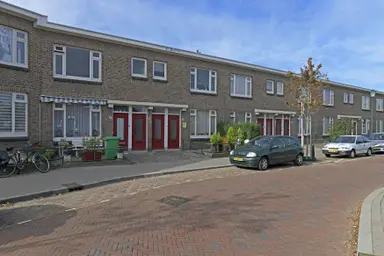
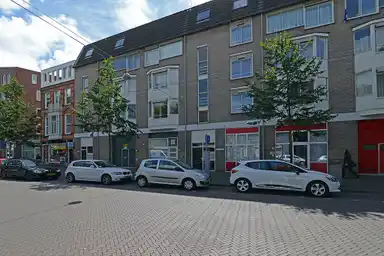
Apartments in Den Haag are the market. With 32,837 tracked listings at an average of €1,889/month for 85 m², they define the typical renter experience. Most are in pre-war or early post-war blocks close to the center, Scheveningen, or along the main tram corridors.
Houses for rent in Den Haag average €3,129/month for 156 m², the costliest segment per listing. At just 8% of the market (3,541 listings), supply is tight. Families and senior diplomats are the primary audience. Studios in Den Haag occupy the middle entry point at €1,045/month for 35 m², with 1,834 listings tracked. They appeal to solo renters wanting independence without committing to a full apartment budget. Rooms in Den Haag are the smallest slice at 14% (6,065 listings) but the most accessible at €736/month on average, largely driven by the student population and younger professionals in their first year in the city.
Who rents in Den Haag: expats, civil servants, students
The renter mix in Den Haag is specific. Expat-targeted listings make up 16% of all tracked inventory, a notably high share for a Dutch city outside Amsterdam. These are typically fully furnished, shorter-term contracts marketed to professionals arriving via the UN, the International Criminal Court, or Shell's headquarters. At 40% furnished overall, Den Haag offers more ready-to-move-in options than the Dutch average.
Student-targeted listings account for 9% of the market, lower than Leiden or Utrecht but meaningful given The Hague University's 28,000+ students. Registration is confirmed in 74% of listings, a key number for EU citizens needing BRP registration and for Dutch benefit eligibility. Pet-friendly supply is tight at just 3%, one of the consistent pain points for animal-owning renters in the city.
Where to rent in Den Haag: three distinct markets
Den Haag has no single rental center. Prices, supply, and renter profiles shift dramatically between neighborhoods, from the manicured streets of the international zone near Clingendael to the dense, affordable blocks of Schilderswijk. Knowing which zone fits your budget and lifestyle shortens the search significantly.
Statenkwartier and Benoordenhout: the expat belt
These two adjacent neighborhoods form the core of the international rental market in Den Haag. Large early-20th-century apartments and villas line the tree-covered avenues between the Scheveningseweg and Alexanderstraat, close enough to cycle to the Peace Palace or the main ministries. Rents here typically sit well above the city average, with many listings furnished and on short international contracts. Supply turns over quickly: posting alerts and being ready to schedule a viewing within 24 hours is standard practice.
Schilderswijk and Transvaal: dense supply near Hollands Spoor
South and southeast of the city center, these neighborhoods offer the most accessible price points in a central location. Listings here skew toward smaller apartments and rooms, frequently without parking (the 27% city-wide average with parking drops further here) and almost never with a garden, which explains the 16% garden rate across Den Haag as a whole. The Hollands Spoor train station is walkable, making commutes to Delft or Rotterdam straightforward. For renters priced out of Statenkwartier, this corridor is the pragmatic alternative.
Scheveningen and Kijkduin: coastal apartments near the sea
Den Haag has a coastline, and the rental implications are real. Sea-view apartments in Scheveningen attract a distinct renter: professionals valuing a 15-minute tram ride to the center over the premium paid for proximity to the Kurhaus boulevard. Kijkduin, further south, is quieter and draws more families and longer-term tenants. Neither area is cheap, both sit above the city average, but balconies are far more common here than in the urban core. The local weekly market on the Frederik Hendriklaan is five minutes from most central Scheveningen rentals, a practical reference point for anyone weighing the neighborhood.
Registration tip: 74% of listings allow it, but check the fine print:
In Den Haag, 74% of tracked listings allow BRP registration, which is higher than many Dutch cities. However, short-term furnished rentals (common in the expat belt) sometimes list 'registration possible' while hiding a minimum-contract clause that makes it impractical. Always ask the landlord to confirm the gemeente will accept the registration before signing. At the Haagse centrale bibliotheek on Spui, you can access free housing advice from Woonbond-affiliated advisors on Thursday mornings.
Commuting from Den Haag
Den Haag sits at a strategic point on the Dutch rail network. Two main stations, Den Haag Centraal and Hollands Spoor, handle Intercity and Sprinter traffic in different directions. Cycling infrastructure is dense within the city, but most out-of-town commuters use NS trains. The Randstadrail network also connects Den Haag directly with Zoetermeer and Delft without transferring at a main station.
Rotterdam: 18 minutes by public transit
The 23 km stretch to Rotterdam takes around 18 minutes by Intercity from Den Haag Centraal, making this the most used cross-city commute in the corridor. Many Rotterdam-based employers have staff living in Den Haag for the institutional character and coastal proximity. The Leiden–Den Haag–Rotterdam axis is one of the densest rail corridors in the Netherlands, with trains departing multiple times per hour.
Utrecht: 34 minutes, central Netherlands access
Utrecht is about 34 minutes by public transit from Den Haag, covering 61 km. This connection matters for renters whose employer sits in Utrecht's Papendorp or Leidsche Rijn business zones while they prefer Den Haag for housing. The direct Intercity link runs frequently enough to make this a practical daily commute, though Utrecht's own Leiden corridor (18 minutes from Den Haag) is an alternative midpoint for some.
Amsterdam: 44 minutes by rail, feasible for hybrid schedules
Amsterdam is 63 km away and about 44 minutes by public transit from Den Haag Centraal. Daily five-day commuting is on the heavy side, but for two or three days per week, many renters find it manageable, especially given the significant price difference between the two cities' rental markets. An NS-flex subscription with dal-uren (off-peak) discounts lowers the cost substantially for those commuting outside the 06:30–09:00 and 16:00–18:30 peak windows.
For Randstadrail commuters: use OV-fiets at both ends:
The Randstadrail tram-train between Den Haag and Delft is a practical option that NS intercity trains don't always beat on door-to-door time. An OV-chipkaart with an OV-fiets subscription (€0.85/hour for the shared bikes at most major stops) often closes the last-mile gap faster than waiting for a bus connection. If you rent in Den Haag and work in Delft, this combination can cut your actual commute by 10–15 minutes compared to a pure train journey.
Frequently asked questions about renting in Den Haag
Is Den Haag significantly more expensive than Delft?
Yes, measurably so. Based on tracked listings, Den Haag averages €1,789/month versus around €1,440/month in Delft, a gap of roughly 31%. The premium reflects Den Haag's larger apartments, higher expat demand, and the institutional employment base that keeps vacancy low. Delft does have its own price pressure due to TU Delft students, but the absolute average is lower. For renters working in either city, the Randstadrail and NS Intercity make a cross-city commute realistic.
How competitive is the Den Haag rental market for expats?
Den Haag has a structurally higher expat supply than most Dutch cities, with 16% of tracked listings explicitly targeting international renters. The fully furnished, short-term segment (common in Statenkwartier and Benoordenhout) moves fastest, often leased within days of listing. The general market is competitive but not to the same extreme as Amsterdam. Having a Dutch bank account, a local guarantor, or employer housing support documentation speeds up the process significantly. Relocation agencies active in the Benoordenhout corridor can shortcut the search but typically charge one month's rent as a fee.
What is the typical deposit amount in Den Haag?
The average deposit across tracked Den Haag listings is 1.1 months' rent. In practice, most private landlords ask for exactly one or two months upfront, with one month being more common for standard apartments and two months more frequent on furnished, higher-value properties. Since a new Dutch law limits deposits to a maximum of two months' rent for new contracts, requests above that are legally not enforceable. Always get the deposit terms in writing before transferring any amount.
Are there affordable student rooms in Den Haag?
Rooms are the smallest segment tracked in Den Haag at 14% of the market (6,065 listings), but they exist at a significantly lower average than the overall city, around €736/month. Student-targeted listings make up 9% of the total, concentrated near The Hague University of Applied Sciences on Johanna Westerdijkplein and around the city center. DUWO and SSH operate dedicated student housing, but waiting lists are long, private rooms fill the gap. Student rooms in Den Haag are most easily found by acting in July and August before the September intake.