Antikraak explained: cheap housing with almost no rent protection
Updated on 27 October 202611 min read
New listings go in hours. RentHunter checks 1,100+ rental sites and alerts you within 30 seconds.See the listings →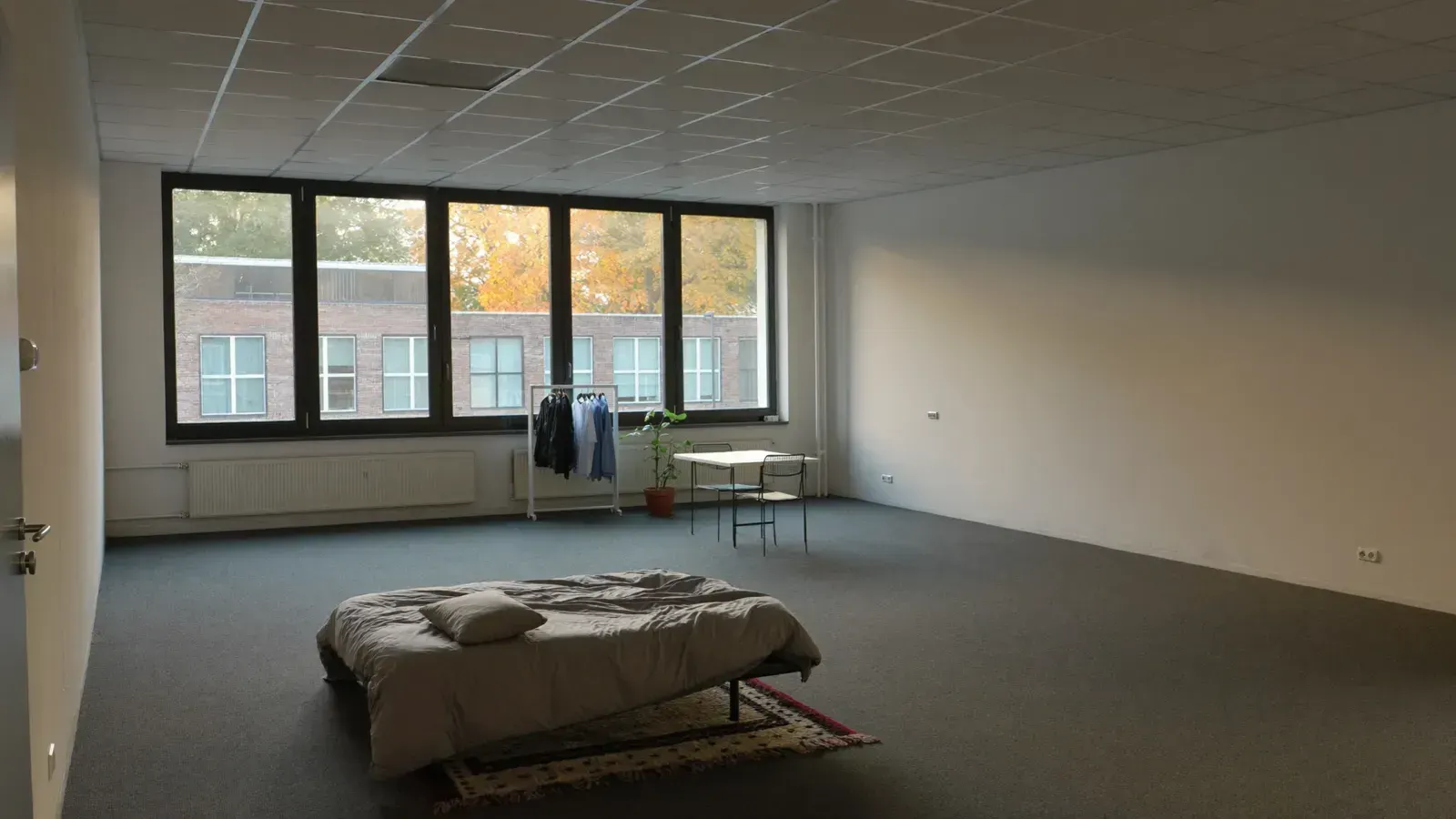
Key takeaways
- Anti-squat spaces asked a median of €235 a month (RentHunter data, 385 listings from 6 anti-squat managers, January to mid-October 2026). A quarter asked €205 or less.
- You sign a gebruikersovereenkomst (user agreement, legally a loan for use), not a huurovereenkomst (lease), so you have no rent protection.
- The notice is short: usually 2 weeks or 28 days, according to the Woonbond. Managers with the Keurmerk Leegstandbeheer must allow at least four weeks.
- No lease, no huurtoeslag: the Belastingdienst requires a huurovereenkomst. Ask in writing whether you can register at the address before you commit.
Table of contents
- What is antikraak?
- What antikraak costs in 2026
- Gebruikersovereenkomst vs huurovereenkomst: the bit that matters
- The antikraak notice period: 2 weeks or 28 days
- Can you register at an antikraak address?
- House rules: inspections, kids, pets and holidays
- How to find an antikraak place
- Is antikraak worth it?
- Frequently asked questions
- Sources
You're scrolling rental listings on a Sunday night, already fed up with the housing hunt, and there it is: a whole classroom in an old school, tall windows, in a city you actually like, for a monthly fee that looks like a typo. It's not a typo. It's not a scam either. It's antikraak, and the catch sits in the contract, not in the price.
Antikraak (anti-squatting) is how plenty of students and young people working in the Netherlands find housing in empty offices, schools and care homes for a fraction of normal rent, often in a big city like Amsterdam. The deal is simple: you get space, the property owner gets someone living in the building. What you lose is most of what makes a tenant safe here. So here's the honest 2026 version: what you'll pay, what a gebruikersovereenkomst really means, how short the notice can get, and what to check before you commit to anything.
What is antikraak?
Antikraak (anti-squat housing, also called leegstandbeheer or property guardianship) means living in a vacant building to keep it occupied, so squatting, vandalism and decay stay out. It's temporary by design, not long-term housing. You sign a gebruikersovereenkomst (user agreement) with a vacancy manager instead of a lease, pay a monthly fee instead of rent, and can be asked to leave on short notice.
The buildings are rarely normal homes. Old offices, schools, shops, convents, sometimes a house waiting to be sold or knocked down: unique places you'd never get to live in any other way. Ad Hoc, a large manager, says it looks after empty convents, regeneration projects and even windmills. The owner keeps the property occupied and in shape. You get a lot of square metres for very little money.
Who runs it? Vacancy managers (leegstandbeheerders), usually called anti-squat agencies. On 8 October 2026, 21 of them held the Keurmerk Leegstandbeheer (KLB), the sector's quality mark, among them Alvast, Gapph, Livable, VPS and Dé Vastgoedbeschermer. Remember that name, it comes back in a minute.
What antikraak costs in 2026
Antikraak is cheap, and our data shows how cheap: spaces the managers label as anti-squat asked a median of €235 a month in 2026 (RentHunter data, 385 listings from 6 managers, January to mid-October 2026).
| Median fee we tracked | €235 |
|---|---|
| KLB maximum, utilities not included | €238.1 |
| KLB maximum, utilities included | €330.68 |
A quarter of those listings asked €205 or less, a quarter €300 or more. For comparison, the KLB caps what its members are allowed to charge in 2026 at €238.10 a month per person without utilities and €330.68 with utilities included. Of the listings we tracked, 97.7% sat at or under that second cap.
Then the costs you pay once. KLB members can charge at most €50 to register you, €90 in admin costs and €90 each time they move you to another building, never admin and moving costs on the same move. So a first month at the median with a KLB member can come to €235 + €50 + €90 = €375 (own calculation from the figures above). Not a deal breaker. Just don't let it surprise you.
Ask about gas, water and electricity too. Some managers include them, others bill them on top, and that changes what you really pay each month. It can also change your rights (more on that below).
monthly fees of spaces that six anti-squat managers label as anti-squat on their own sites, first seen from 1 January to 14 October 2026. Their temporary leases are left out, a listing reposted within a week counts once, and we report medians, never averages. One manager supplies about half of the listings, so read the median as a ballpark, not a fixed price.
Gebruikersovereenkomst vs huurovereenkomst: the bit that matters
A gebruikersovereenkomst is not a lease, and that single fact decides almost everything else. In legal terms it's bruikleen (loan for use): under article 7A:1777 of the Civil Code, something is lent "om niet", free of charge. That's why you pay a vergoeding (fee) and not rent, and why, as the Woonbond (the national tenants' union) puts it, residents have no huurbescherming (rent protection). Anti-squatting contracts may also be called gebruiksovereenkomst, antikraakovereenkomst or bruikleenovereenkomst. Same thing.
Some anti-squat agencies also offer temporary leases under the Leegstandwet (Vacancy Act). Different animal: the gemeente grants the owner a permit, you get a real huurovereenkomst for at least six months, the landlord has to allow at least three months' notice, you need at most one month, and the permit sets the maximum rent. The lease ends when the permit ends, so it's not a forever home. Still miles ahead of antikraak.
| Antikraak | Temporary lease (Leegstandwet) | Regular lease | |
|---|---|---|---|
| Contract | Gebruikersovereenkomst (bruikleen) | Huurovereenkomst, with a gemeente permit | Huurovereenkomst |
| You are | User | Tenant | Tenant |
| Notice from the owner | Usually 2 or 4 weeks | At least 3 months | Only on a legal ground |
| Price | Fee, capped for KLB members only | Maximum set in the permit | Price rules apply |
| Rent protection | None | Limited | Full |
| Huurtoeslag | No | Check with the Belastingdienst | If you meet the conditions |
Read which one you're signing. It's written at the top of the contract, and it matters more than the floor plan.
according to the Woonbond, if you pay a monthly fee for the space and also pay gas, water and electricity yourself, that is in fact rent: the agreement can become a lease, and you can claim the legal protection of a tenant. Work such as guarding the building, keeping the garden or doing odd jobs can also count as payment "in kind".
If that sounds like your contract, don't fight it alone. The Woonbond points anti-squat residents to the Bond Precaire Woonvormen, a volunteer association that specialises in exactly this.
The antikraak notice period: 2 weeks or 28 days
This is the risk that actually bites. The Woonbond says the manager can terminate a gebruikersovereenkomst and on short notice, usually 2 weeks or 28 days, and you have no right to replacement housing. Managers with the KLB mark must allow at least four weeks and don't have to offer you another space either. An agency outside the KLB can put two weeks in the contract.
Two weeks. In this market. Yeah.
So check the notice clause before anything else, and check the manager against the KLB list. Then plan the exit before you've even moved in:
The letter arrives
Check the end date against your contract. Managers with the Keurmerk Leegstandbeheer must allow at least 28 days, others can write two weeks into the contract.
Ask about doorschuiven
Ask the manager in writing whether they can move you to another building (doorschuiven). They can try, but they don't have to. KLB members charge at most €90 for the move in 2026.
Start the search that day
Set alerts for your budget and warn the people behind your back-up address that you may need it.
Register your new address
Report the move to the gemeente of your new address, at most 5 days after you move.
Hand back the keys
Take photos of every room on the last day and get the handover confirmed in writing.
A large manager asks every resident for a back-up address where you can actually stay when the agreement ends. Treat that as a rule for any antikraak place, not as a box to tick.
Can you register at an antikraak address?
Registration is the question to settle before you commit, not after. The law asks you to register with your city's gemeente (municipality) where you actually live, at most 5 days after you move, according to Rijksoverheid. An old office or school isn't always set up as a home, so ask the manager straight out: "Kan ik me op dit adres inschrijven?" (Can I register at this address?) And get the yes in writing, not just a nod at the viewing.
And huurtoeslag (rent allowance)? No. The Belastingdienst lists a huurovereenkomst between you and the landlord as a condition, and a gebruikersovereenkomst isn't a lease. If you're weighing antikraak against renting a cheap room on a real lease, look at how much huurtoeslag you could get first. The gap can be smaller than it looks.
House rules: inspections, kids, pets and holidays
Every manager writes its own rules, and they're stricter than most leases. As of October 2026, Ad Hoc looks for residents who have valid ID, are preferably 18 to 35, speak Dutch, English or German, have no children living with them, no pets, and a back-up address. Its checks are announced in advance.
The Woonbond warns that many contracts favour the owner: unexpected inspections, maintenance and supervision duties, bans on parties or on someone moving in with you. The same page notes that KLB members aren't allowed to come in without your permission except in an emergency, but you'll often have to report when you go on holiday and cooperate with viewings by potential buyers. Not the place for a housewarming that turns into a club night.
How to find an antikraak place
There's no central sign-up. You register with each agency on its own site, and each has its own rules, so it takes some time. Some are picky in ways you won't guess: Ad Hoc only takes new antikraak residents when a current resident nominates them, and asks for a recent payslip and a photo when you apply.
 Illustration generated by AI.
Register with three or four agencies, not just your favourite. Check each against the KLB list, and read three clauses before you commit: the notice period, what the monthly payment includes, and whether you can register at the address.
The KLB also takes reports and complaints about any manager, with or without the mark, including unsafe buildings. Worth knowing before something leaks.
And keep a normal search running alongside. Checking ten sites every evening gets old fast. RentHunter brings listings from 1,100+ rental sites in the Netherlands into one search, so you stop checking them one by one, and you've got a next step ready the day the notice letter lands.
Is antikraak worth it?
For the right person (often a student or a young worker with a flexible plan), honestly, yes. If you're flexible, have no kids or pets, keep a real back-up address and don't need huurtoeslag, a big space for a small monthly payment is hard to beat. If you need a stable address for a year or more, or you'd panic at a four week notice, it's a hard pass.
Before you decide, look at what regular rental housing costs where you want to live, and what renting a normal room would mean for your budget. The listings for Amsterdam or Rotterdam show you the gap in a minute, and our guide to cheap apartments in the Netherlands covers the other budget options. Antikraak in Amsterdam can feel like a cheat code. Just remember who holds the off switch, and that the people who do well with it are the ones who know that from day one.
Frequently asked questions
Is antikraak legal?
Yes. Bruikleen is a normal contract under the Civil Code, and the big agencies carry a quality mark. Legal, yes. Protected, no: the Woonbond is clear that a gebruikersovereenkomst gives you no rent protection.
How long can you live in an antikraak place?
As long as the building stays empty. The Woonbond says anything from a few weeks to a few years. Nobody can promise you more time, and nobody will.
What do you pay for antikraak?
A median of €235 a month for spaces the managers label as anti-squat (RentHunter data, 385 listings, January to mid-October 2026). KLB members can charge at most €238.10 without utilities or €330.68 with them in 2026, plus registration and admin costs paid once.
How do you qualify for antikraak?
Each agency sets its own rules: think valid ID, no kids or pets living with you, and a back-up address. The house rules section above has a large manager's requirements for October 2026.
Can you get huurtoeslag with antikraak?
Nope. The Belastingdienst requires a huurovereenkomst, and a gebruikersovereenkomst isn't a lease.
What do you do when the notice letter arrives?
Check the end date against your contract, ask the manager in writing whether they can move you to another building, and start looking that day. RentHunter brings listings from 1,100+ rental sites into one search, so set an alert for your budget and let new rooms come to your inbox or the app.
What does "anti kraak" mean in English?
Anti-squatting. Kraken is Dutch for squatting, so antikraak literally means you live there so nobody squats it. Anti-squatting started as a way for owners to keep empty buildings safe. You're the human alarm system, with a bed.
Antikraak is a trade: lots of space for very little money, in exchange for almost no security. Fine, as long as you go in knowing the notice can be four weeks, or two. Keep your back-up address real, your contract read and your search alive. Set a free alert on RentHunter and new rooms that match your budget land in your inbox or the app.
Happy anti-squat hunting!
Sources
- Woonbond, Bruikleen of 'antikraak', checked 20 October 2026
- Keurmerk Leegstandbeheer, Normen, procedures en gedragscode (2026 maximum fees), checked 20 October 2026
- Keurmerk Leegstandbeheer, Waar staat het Keurmerk Leegstandbeheer voor?, checked 20 October 2026
- Keurmerk Leegstandbeheer, Gecertificeerden (list of 8 October 2026), checked 20 October 2026
- Burgerlijk Wetboek Boek 7A, artikel 1777, checked 20 October 2026
- Leegstandwet, artikelen 15 en 16, checked 20 October 2026
- Belastingdienst, Voorwaarden voor huurtoeslag, checked 20 October 2026
- Rijksoverheid, Hoe kan ik mijn verhuizing doorgeven aan de gemeente?, checked 20 October 2026
- Ad Hoc, Antikraak wonen, checked 20 October 2026
- RentHunter data: 385 listings labelled anti-squat by 6 anti-squat managers, first seen 1 January to 14 October 2026, medians
Search smarter
Anti squat can end at short notice. Keep a regular rental alert running so you always have a next option.

Ready to find your perfect home?
Join thousands of expats, students, and professionals who found their home with RentHunter.