Apartments, rooms and studios for rent in Pijnacker Nootdorp

Stop refreshing, get daily matches
Stop refreshing, get daily matches
Pijnacker-Nootdorp rentals: the commuter's numbers
Pijnacker-Nootdorp sits in Zuid-Holland at a specific crossroads: 14 km from both Rotterdam and Den Haag, connected by the RandstadRail lightrail that drops you at Rotterdam Centraal in around 32 minutes and Den Haag Centraal in around 33. The rental market here is built around that commuting reality. Renters who price-shop the Randstad corridor consistently land here when the gap between city and suburb becomes too large to ignore.
On RentHunter, the Pijnacker-Nootdorp stock leans heavily toward apartments and houses rather than the student rooms that dominate cities like Delft or Leiden. Families, couples, and hybrid-working professionals make up the majority of searchers. If you are weighing up whether the municipality is the right base, the answer almost always comes back to one calculation: how many days a week do you actually need to be in the city?
Space and lower rents vs. 30 minutes on the RandstadRail
The core trade-off in Pijnacker-Nootdorp is straightforward. You gain noticeably more floor space and private outdoor area compared to equivalent-budget rentals in Rotterdam or Den Haag. A mid-range house or apartment here typically comes with a garden or balcony that would cost significantly more inside either city. That difference is particularly meaningful for couples saving toward a mortgage, families with children who need outdoor space, or remote workers who need a dedicated room and tolerate the commute on the two or three days they travel.
The commute itself is one of the better ones in the Randstad by lightrail standards. RandstadRail line E runs through Pijnacker and Nootdorp directly into central Rotterdam in about 32 minutes. The same network connects to Den Haag in about 33 minutes. Both cities have major employment hubs, the Rotterdam port corridor and the Den Haag government and international organisations cluster. For anyone doing a standard five-day week entirely in the office, the round trip runs roughly an hour, which at the Dutch dal-uren rate is manageable. For hybrid workers doing three or fewer office days, the savings on rent can outweigh the commute cost within months.
Houses and apartments dominate: no student room culture here
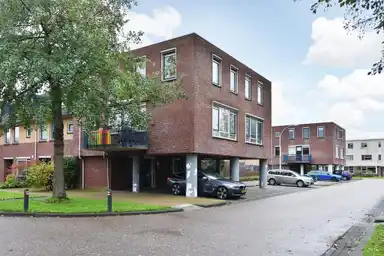
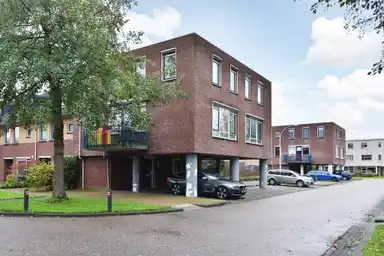
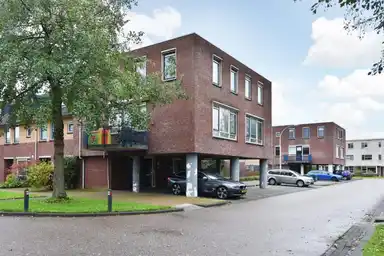
The rental stock in Pijnacker-Nootdorp reflects the municipality's character as a family-oriented commuter suburb in Zuid-Holland. Unlike student cities where shared rooms represent a large share of listings, the market here is built around self-contained units. Houses with gardens are the flagship product, followed by apartments that predominantly come from newer residential developments built since the 1990s expansion of both Pijnacker and Nootdorp. Shared rooms exist but remain a small slice of the total market.
Houses: the main reason renters choose Pijnacker-Nootdorp
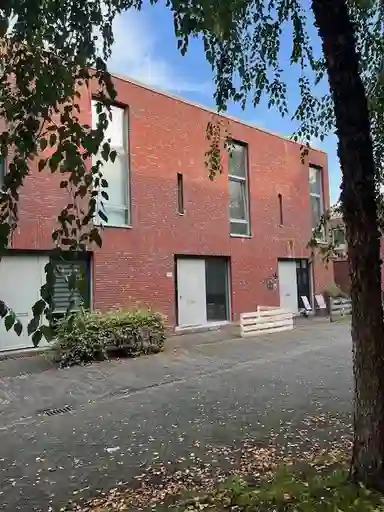
Single-family houses are the defining segment of the Pijnacker-Nootdorp rental market. You find terraced houses, semi-detached, and occasional detached properties, most with front and back gardens, a garage or carport, and room counts that simply don't exist at similar price points in Rotterdam or Den Haag. The postwar and 1990s expansion neighbourhoods are where the bulk of rental houses sit. Browse houses for rent in Pijnacker-Nootdorp if extra space or a garden is your primary criterion.
Apartments from newer developments near station zones
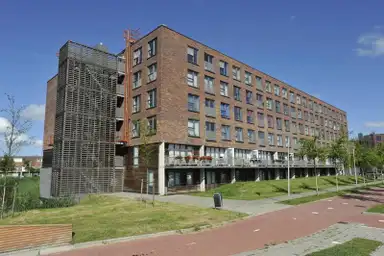
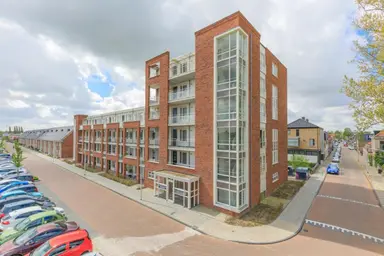
Apartments in Pijnacker-Nootdorp tend to come from residential blocks built during the post-1990 growth phases, not from converted older townhouses as you'd see in Delft or the historic city centres. Ground-floor units often include private storage and a bicycle cellar; upper floors occasionally have a roof terrace. The practical advantage for commuters is proximity to the RandstadRail stops. Check the current stock of apartments in Pijnacker-Nootdorp if you prefer low-maintenance living without a garden.
Rooms: limited stock, not a student market
Rooms in Pijnacker-Nootdorp are a minor part of the overall market. There is no university campus here, and the municipality does not attract the seasonal wave of student searchers that hits cities like Leiden or Delft each August. Rooms that do appear tend to be in shared houses occupied by young professionals rather than students, and they are snapped up quickly because supply is thin. If a room is your target accommodation type, the listing pool for rooms in Pijnacker-Nootdorp is small enough that setting up a daily alert is strongly advisable.
Where to rent in Pijnacker-Nootdorp: four distinct zones
- Pijnacker centre: village feel, older housing stock Pijnacker's original core around the Kerkplein retains a small-scale, low-rise feel rare in the wider Randstad. Housing here dates mainly from the mid-twentieth century: terraced houses with modest gardens, close to the weekly market, the Albert Heijn, and the RandstadRail station on Laan der Continenten. Schools and daily services are within cycling distance. Renters here typically value the quieter pace and walkability over the newest finishes.
- Nootdorp: family suburb near the A12 corridor Nootdorp has a quieter, more suburban feel than Pijnacker. Its residential streets are dominated by 1980s and 1990s construction: semi-detached houses and terraces with well-established gardens. The connection to the A12 motorway makes car commuters' routes to The Hague or Utrecht straightforward. Families with primary-school-aged children are the most common renters in this part of the municipality. It is less connected by lightrail than Pijnacker proper, so access to a car or bicycle remains practical.
- Delfgauw: newer build, green open space, young families Delfgauw, situated between Pijnacker and Delft, is one of the municipality's newer growth areas. Housing here is predominantly recent construction, often with energy-efficient specifications and larger plot sizes than you'd find closer to the urban centres of either Delft or Den Haag. The area borders farmland and recreational green areas, which draws young families who want the space of a garden suburb without paying inner-city prices. The proximity to the N470 and the cycling route into Delft makes it popular among those who use both towns for work or daily errands.
- Ackerswoude and Keijzershof: modern estates, direct station access Ackerswoude and Keijzershof are two of the municipality's most recent residential expansions, developed in the 2000s and 2010s specifically to house the commuter demographic. Properties here are mainly newer terraced and semi-detached houses with contemporary layouts, good insulation ratings, and garages or driveways designed for multi-car households. Both areas sit within easy cycling distance of a RandstadRail stop. If minimising door-to-platform time is a priority, these neighbourhoods consistently come up as practical first choices.
Commuting from Pijnacker-Nootdorp
Pijnacker-Nootdorp's public transport backbone is the RandstadRail network, specifically lines E and F, which connect the municipality to both Rotterdam and Den Haag without requiring a train transfer. For longer-distance trips, the NS intercity network is reachable via Zoetermeer or Delft. By car, the A12 and N470 offer relatively direct access to the main urban centres. Cycle routes are well-maintained, and the flat Zuid-Holland terrain means that the 10-12 km to central Delft is a realistic daily cycling distance for some residents.
Rotterdam (~32 min): port city, finance, and logistics jobs
The RandstadRail line E connects Pijnacker directly to Rotterdam Centraal in around 32 minutes. Rotterdam is the larger employment centre of the two nearest hubs, with the Europoort-Botlek corridor, the financial district around Coolsingel, and a dense cluster of head offices that relocated from Amsterdam over the past decade. Rental prices inside Rotterdam are consistently higher than Pijnacker-Nootdorp for equivalent floor areas, which is the primary reason this commute route carries significant renter traffic. You can compare current listings in Rotterdam to calibrate the exact price difference.
Den Haag (~33 min): government, EU institutions, international sector
Den Haag is the other anchor at roughly the same distance, around 33 minutes by RandstadRail. As the seat of the Dutch government and home to several international courts and organisations, it draws a specific demographic: civil servants, international organisation staff, and legal professionals. Renters in this category often prioritise stability and find Pijnacker-Nootdorp appealing precisely because the transit time is predictable and the municipality has good primary schooling. Listings inside Den Haag are available for direct comparison if you're weighing both cities as potential bases.
OV-chipkaart tip: dal-uren discounts cut your monthly travel cost
If you travel to Rotterdam or Den Haag by RandstadRail and your schedule allows flexibility, the NS dal-uren (off-peak) discount applies on most RandstadRail segments. Travelling outside the 06:30–09:00 and 16:00–18:30 rush windows gives a meaningful reduction per trip. Over a full month of hybrid-work commuting, loading your OV-chipkaart with a personal subscription (persoonlijk OV-abonnement) calibrated to your actual office days can halve your monthly transit spend compared to single-trip fares.
Frequently asked questions about renting in Pijnacker-Nootdorp
Is Pijnacker-Nootdorp cheaper to rent in than Den Haag or Rotterdam?
Generally yes. For equivalent floor space and property type, asking rents in Pijnacker-Nootdorp tend to fall below central Den Haag and Rotterdam levels. The gap is most visible in the house segment: a terraced house with garden costs significantly more per month inside either city than in this municipality. The trade-off is the RandstadRail commute, which adds roughly 30 minutes each way. For studio and small apartment comparisons, the delta can be smaller, particularly if you're comparing to less central neighbourhoods of Rotterdam or Den Haag.
Are pets allowed in rental properties in Pijnacker-Nootdorp?
Pet policy is set by individual landlords, not at the municipal level. In Pijnacker-Nootdorp, where a large share of the rental stock consists of houses with private gardens, landlords of houses tend to be more open to cats and dogs than apartment landlords in high-rise stock, though this varies. The standard approach is to address it explicitly before signing: ask for written permission for the specific animal, as verbal agreements are difficult to enforce. Some landlords add a pet clause to the lease rather than an outright ban, which gives both sides clarity.
How competitive is the rental market in Pijnacker-Nootdorp compared to its neighbours?
Pijnacker-Nootdorp sits in a segment that is less immediately pressured than central Delft or Den Haag, but the municipal rental pool is relatively small in absolute terms. Because there is no student demand spike in September, competition does not have the same seasonal peaks you see in Delft or Leiden. That said, desirable houses with gardens near the RandstadRail tend to attract multiple applicants quickly. Waiting times are shorter than in the major city centres, but acting within one to three days of a listing appearing remains the recommended approach.
Do most rental properties in Pijnacker-Nootdorp include a garden?
For houses, yes: a private back garden and often a small front garden are standard features of the terraced and semi-detached house stock that dominates the municipality. The garden is one of the primary reasons families and couples move here from denser cities. For apartments the picture is different: ground-floor units may have a terrace or small patio, while upper-floor apartments more typically offer a balcony. Roof terraces exist on some newer blocks but are not universal. When comparing listings, check whether the outdoor space is fully private or shared with other residents in the block.
Can I find short-term or furnished rentals in Pijnacker-Nootdorp?
Short-term and furnished rentals are relatively uncommon in Pijnacker-Nootdorp compared to central Amsterdam or Den Haag. The market is oriented toward longer leases, typically 12 months or more, with unfurnished properties the norm. Furnished units do occasionally appear, usually because an expat family is temporarily vacating their home or a landlord is targeting internationally mobile professionals working for organisations in Den Haag. If a short-term contract is essential, filtering explicitly for that on RentHunter and broadening the search radius to include Den Haag or Delft listings may produce more options.