Apartments, rooms and studios for rent in Hardenberg
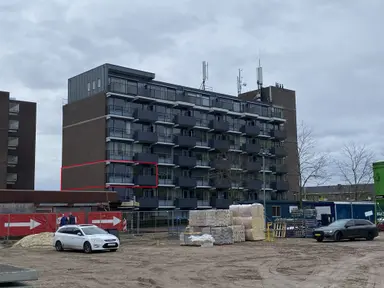
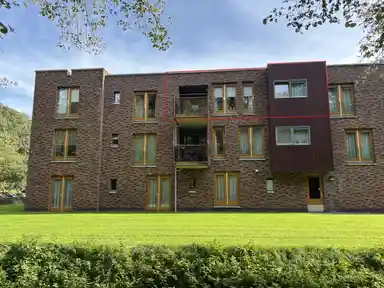
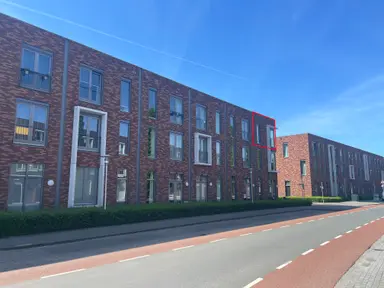
Apartment, Hardenberg
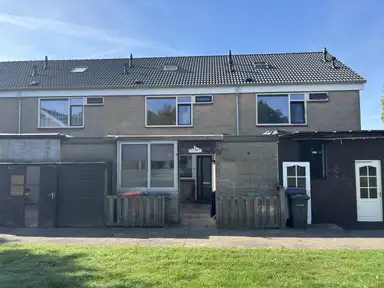
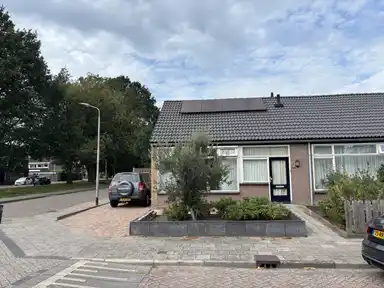

Stop refreshing, get daily matches
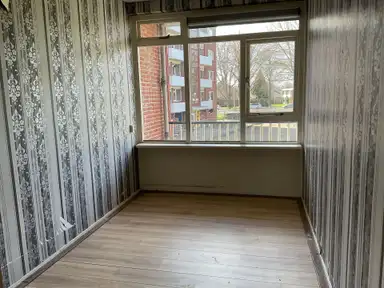
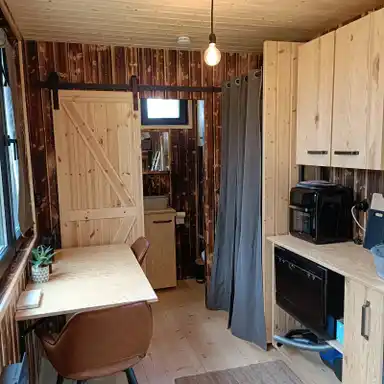
Stop refreshing, get daily matches
Hardenberg at €934/month: the Overijssel trade-off
Hardenberg sits at the northeastern edge of Overijssel, a municipality of 60,000 people that functions as a genuine regional center rather than a satellite of Zwolle or Hengelo. The Vecht river runs through the wider municipal area, and on Saturday mornings the Markt in the town center fills with market stalls the way it has for generations. For renters, this self-contained character matters: shops, healthcare, schools, and employers are all within the municipality, so you are not automatically dependent on a larger city for daily life.
The rental landscape here is shaped by that independence. Based on over 300 listings tracked in Hardenberg on RentHunter, the average rent sits at €934/month across a 72 m² average surface. That is roughly 15% below the average in Zwolle, a gap that adds up fast when you compare annual housing costs. The stock runs from €200 at the low end to €1,795 at the top, giving renters at almost any budget a realistic foothold in the market.
What makes Hardenberg distinct from most Overijssel municipalities is the range of renter profiles it serves. The market is not purely family-oriented, nor purely driven by one institution: about 22% of tracked listings are student-targeted, reflecting the presence of local secondary vocational education and the area's ties to regional training infrastructure, while only 5% are explicitly expat-targeted, which tells you this is a genuinely local market rather than an internationally mobile one.
Numbers behind the Hardenberg rental market
The average rent of €934/month for 72 m² gives Hardenberg a price-per-square-meter ratio that is hard to match in most of Overijssel. Compared to Zwolle's hub average of around €1,054, you are saving roughly €120 every month for a comparably sized home. Over a year, that is more than €1,400 back in your pocket without sacrificing access to a fully functional town center with its own retail, hospitality, and civic services.
Deposit expectations in Hardenberg are unusually low: the tracked average is just 0.4 months, a figure that stands out against the Dutch norm of one to two months. That means less upfront capital tied up when you move in. Furnished listings make up only 12% of the market, so most renters should plan to bring or buy furniture, the stock here is primarily unfurnished, long-let housing aimed at permanent residents.
Some features worth noting from the data: 34% of listings include a garden, a notably high share that reflects the suburban and semi-rural character of many Hardenberg neighborhoods. Balconies appear in 40% of listings. Parking is included in 16% of tracked listings, which is lower than you might expect for a town this size, suggesting that street parking or nearby lots cover most residents' needs. For renters who prioritize municipal registration (inschrijving), 88% of listings permit it, an important figure for anyone building a local life here.
Apartments and houses: Hardenberg's two-tier market
Hardenberg's rental stock is split between two clearly defined segments with no significant room or studio market to complicate the picture. Apartments are the majority type at 57% of the market, while houses account for 41%. That concentration means renters face a straightforward choice rather than a fragmented landscape, and price signals are relatively transparent across both segments.
Apartments: 57% of the market at €892/month
Imagine finishing your shift at one of the industrial employers on Hessenpoort and cycling back to your apartment in the center in under fifteen minutes, no highway, no train. That is the everyday reality apartments in Hardenberg enable. With 198 tracked listings averaging €892/month for 59 m², apartments in Hardenberg are the entry point for singles, couples, and students who want to live close to the town's facilities without taking on the responsibilities of a full house.
At €892/month, these apartments sit comfortably below the Zwolle apartment average, and the 59 m² average means most units are compact but functional. Balconies appear frequently in this segment, consistent with the 40% figure across the whole market. The low furnished rate of 12% citywide applies here too, so budget for basic furniture unless you negotiate otherwise.
Houses: 90 m² average with garden included
Picture cycling from your terraced house near the Vecht with the kids on the back of the bike to the Saturday market on the Markt, locking up near the Hema, and walking home with fresh bread and a bag of vegetables. That kind of domestic routine is what drives demand for houses in Hardenberg. With 140 tracked listings averaging €1,020/month for 90 m², houses in Hardenberg offer substantially more space for an additional €128/month above the apartment average.
The 34% garden figure across the whole market is heavily concentrated in this segment. For families or anyone who values outdoor space, Hardenberg houses consistently outperform urban apartments in comparable Dutch cities at this price point. The 90 m² average also means most houses have three bedrooms, enough for a couple with children or shared living with a home office.
Where to rent in Hardenberg: three distinct areas
Hardenberg municipality covers a large geographic area that takes in the town center and several smaller kernen. For renters, the practical choice is between the urban core of Hardenberg town, the more residential outskirts, and the satellite villages like Dedemsvaart and Gramsbergen. Each has a genuinely different rental character.
Town center: near the Markt and station
The area around the Markt and the train station on Stationsstraat is where most apartments cluster. Imagine walking out of your front door on a Tuesday morning, picking up a coffee at one of the cafés on the Voorstraat, and reaching your train platform within five minutes. Apartments here tend to be in older multi-story blocks from the 1960s and 1970s, with newer builds filling in pockets near the station. Rents in this area generally sit at or just above the €892 apartment average. Proximity to amenities and public transport makes this the natural first choice for renters without a car.
Residential outskirts: family terraces near primary schools
The residential neighborhoods south and east of the town center, around areas like Stadslanden and the post-war expansion zones, are where most of Hardenberg's rental houses are found. Imagine your daughter cycling to her basisschool three streets away while you walk to the supermarkt on the Ootmarsumseweg in the opposite direction, both trips under ten minutes. Streets here are wider, gardens are the norm, and the pace is quieter. These are the streets that account for much of the 34% garden availability figure, and rental houses here typically run €950–€1,100/month for three-bedroom units. Demand from young families keeps vacancy periods short in this segment.
Dedemsvaart: canal-side living at lower rents
Dedemsvaart is the second-largest kern in the municipality, a village built along a historic canal with its own amenities, a supermarket, a library, and a Wednesday market on the Julianastraat. Imagine renting a house with a view over the Dedemsvaart canal, cycling along the waterside path in the morning, and catching the regional bus into Hardenberg town for work or appointments. Rents in Dedemsvaart typically come in below the municipal average, reflecting the slightly longer commute into the center. For anyone who prioritizes space and quiet over urban walkability, it is a compelling choice.
If you are moving from a larger Dutch city, the pace of listings in Hardenberg is slower than in Amsterdam or Utrecht. A listing posted on a Wednesday rarely disappears by Thursday. That said, houses near good primary schools in the residential neighborhoods do move quickly in August and September before the school year starts.
Commuting from Hardenberg
Hardenberg station sits on the Zwolle–Emmen rail line, operated by Arriva. Direct trains run to Zwolle in roughly 35–45 minutes depending on the service, and from Zwolle you can transfer to the national NS network for connections to Amsterdam, Utrecht, and beyond. The town is also accessible by car via the N34 and N48, which connect to the A28 near Ommen. For most destinations in the northern Netherlands, train plus a single transfer gives you a competitive journey time.
Zwolle and Groningen (~78 minutes)
Zwolle is the natural hub for Hardenberg commuters. The Arriva service connects the two towns multiple times per hour during rush hour, making a daily commute to Zwolle's large employment base in healthcare, education, and logistics entirely feasible. The 15% rent discount you get by living in Hardenberg rather than Zwolle almost certainly covers your monthly train pass.
Groningen is reachable in around 78 minutes by public transit. If you work at the UMCG or the Rijksuniversiteit Groningen, renting in Hardenberg and commuting requires discipline around timetables, but it keeps your housing costs well below what renting in Groningen itself would cost.
Amsterdam and Utrecht (~78–89 minutes)
Utrecht is reachable in around 78 minutes by public transit via Zwolle, and Amsterdam in roughly 89 minutes on the same route. These are not trivial commutes for a daily schedule, but for workers who split their week between office and remote days, Hardenberg makes a financially rational base. You save substantially on rent compared to living in either city, and the journey time is manageable two or three days per week.
If you explore rentals in cities like Enschede or Arnhem as alternatives, keep in mind that both are closer to the Randstad rail corridor. Hardenberg sits further from that backbone, which is why its rents stay lower.
Arriva dal-urentarief (off-peak discount) applies on the Zwolle–Emmen line. If your work schedule allows travel outside 7:00–9:00 and 16:00–18:30, you can significantly reduce your monthly travel costs compared to a peak-hour NS card. Check the Arriva app rather than the NS planner for accurate fares on this line.
Frequently asked questions about renting in Hardenberg
Is renting in Hardenberg genuinely cheaper than in Zwolle?
Yes, based on tracked listings, Hardenberg's average rent of €934/month is about 15% below Zwolle's hub average of around €1,054. For a typical apartment, that gap is roughly €120–€160/month in absolute terms. The saving is real and consistent across both apartments and houses. The trade-off is that Hardenberg has fewer listings in absolute terms, so your options at any given moment are narrower.
What are the student housing options in Hardenberg?
About 22% of tracked listings in Hardenberg are student-targeted, which is a meaningful share for a regional town. Most student-oriented listings are apartments in the town center or on the edges of the residential neighborhoods, priced in the lower range of the €892 apartment average. Hardenberg does not have a university, but it serves students at local MBO institutions and those who commute to Zwolle's Windesheim or Saxion for higher education. Dedicated student housing blocks are limited; most student renters here compete for the same apartment stock as other renters.
How competitive is the Hardenberg rental market compared to larger Overijssel cities?
The Hardenberg rental market is less pressured than Zwolle or Enschede, which means listings typically stay available longer and bidding wars are not common. The pool of active listings at any one time is smaller because the total market is smaller, but the supply-demand imbalance that makes cities like Zwolle so stressful to rent in is much less pronounced here. Renters with a stable income and the required documents can usually expect a more straightforward process. The lower average deposit of just 0.4 months also reduces the upfront financial pressure compared to renting in the larger regional cities.
Can I register at the municipality (inschrijven) with a rental in Hardenberg?
Yes, 88% of tracked listings in Hardenberg explicitly permit municipal registration (inschrijving in the BRP). This is one of the higher rates you will find in smaller Dutch municipalities, and it is an important signal for anyone who needs a registered address for healthcare, benefits, or formal employment. The remaining 12% are mostly short-term or furnished rentals where registration may be restricted. Always confirm the registration status in writing before signing your lease.