Apartments, rooms and studios for rent in Súdwest Fryslân

Stop refreshing, get daily matches
Stop refreshing, get daily matches
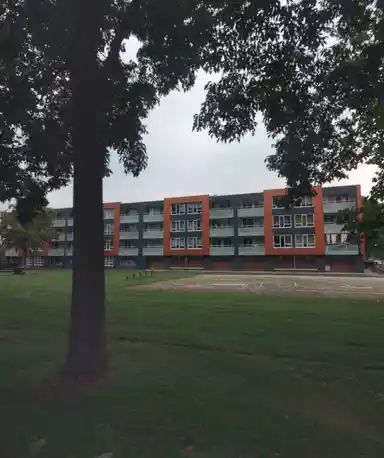
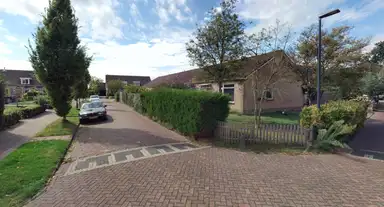
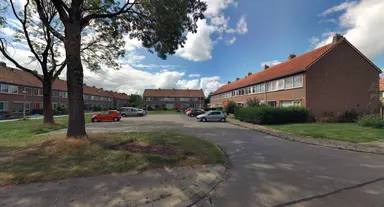
Súdwest Fryslân: space, water, and reasonable rents
Súdwest Fryslân is the largest municipality in the Netherlands by area, yet most people outside Friesland can't quite place it on a map. That's part of the point. The municipality stitches together Sneek, Bolsward, Workum, Makkum, and dozens of smaller Frisian villages into one administrative unit, with the Sneekermeer at its heart and the IJsselmeer coast to the west. The rental market here operates on entirely different logic from the Randstad: landlords aren't fielding fifty applications per listing, and a house with a garden isn't a fantasy on a median income.
Sneek functions as the urban core of Súdwest Fryslân, with the Waterpoort as its most recognizable landmark and the weekly Wednesday market on the Marktstraat drawing in the whole region. Bolsward has its own character, quieter and more dominated by owner-occupied housing, while smaller waterfront towns like Workum and Hindeloopen attract a mix of long-term residents and second-home seekers. For anyone searching rentals in Súdwest Fryslân, Sneek is where the bulk of available housing stock sits.
You can search listings across the municipality on RentHunter, which aggregates available rentals so you're not clicking through multiple platforms to get a full picture. The market moves at a human pace compared to cities like Groningen or Leeuwarden, but that doesn't mean good listings sit forever.
Frisian rents vs. the national average
Súdwest Fryslân sits firmly in the affordable tier of the Dutch rental market. The municipality has no university, no major tech employer, and no Randstad spillover pressure driving prices up. What it does have is a genuine stock of larger homes: detached and semi-detached houses with front and back gardens are a realistic option, not a luxury bracket. Rental houses in Súdwest Fryslân tend to offer more square meters per euro than almost anywhere in the western provinces.
The rental mix skews toward houses and ground-floor apartments rather than high-rise flats, reflecting the built environment: most of Sneek's housing stock dates from the postwar expansion years, with terraced houses along streets like the Leeuwarderweg and older canal-side properties near the Stadsgracht. Apartments in the center are typically found in converted older buildings or above commercial spaces, not in purpose-built residential towers. That means fewer amenities like concierge or elevator, but also lower service costs.
For context on what your rent buys elsewhere, Almere and Alkmaar offer comparable commuter-town positioning but at noticeably higher price points due to their proximity to Amsterdam. In Súdwest Fryslân, you're paying for space and quiet rather than proximity to the capital.
Rental types across the municipality
The rental stock in Súdwest Fryslân is dominated by houses far more than the national average, reflecting the low-rise, village-and-town fabric of the municipality. Apartments are concentrated almost entirely in Sneek's center. Studios and rooms are scarce, a direct consequence of having no student population anchoring that segment. If you're looking for something specific, the breakdown below reflects what the market actually supplies.
Houses: the dominant stock in Súdwest Fryslân
Houses for rent make up the backbone of the Súdwest Fryslân rental market in a way you simply don't see in more urban municipalities. Terraced houses are the most common format, but proper semi-detached and detached properties also appear regularly in the listings, especially in Sneek's residential neighborhoods and in towns like Bolsward and Workum. Garden space and a private parking spot are standard expectations at this market level.
Families and households relocating from the Randstad often find that houses for rent in Súdwest Fryslân offer a quality of living that the same rent budget simply can't buy further west. The trade-off is the distance from major employment centers, which the commuting section covers.
Apartments: a thin market centered on Sneek
Rental apartments in Súdwest Fryslân are almost entirely a Sneek phenomenon. You'll find them in the older buildings along the Leeuwenburg and in a handful of newer complexes closer to the town's edge. The total supply is modest, which means apartment hunters need to move quickly when something appears. Older apartments in converted canal houses occasionally offer unusual layouts and high ceilings at prices below what comparable converted properties would cost in Leeuwarden.
Anyone specifically seeking apartments should set alerts and check listings frequently. The apartment segment doesn't have the depth to allow leisurely browsing. Sizes tend to run smaller than the house segment, which is worth factoring in if you're comparing price per square meter.
Where to rent within Súdwest Fryslân
The municipality covers a vast area with very different characters depending on whether you're in the urban center of Sneek, one of the Hanseatic towns like Bolsward, or a waterfront village. The right location depends heavily on whether you need train access, proximity to services, or are prioritizing space and a slower pace of daily life.
Sneek center: canal-side and connected
The center of Sneek is where you get the densest rental activity in the municipality. Streets like the Martiniplein and the area around the Waterpoort and Gedempte Pol put you within walking distance of the train station, the Wednesday and Saturday markets, and the main supermarkets. Rentals here tend to be apartments above commercial ground floors or terraced houses on streets like the Veemarkt, often in buildings that predate the 1950s and therefore have the character that newer suburbs lack.
Parking can be a consideration in the very center, though most rental properties here include either a permit zone parking option or rear access. The neighborhood is quieter than you'd expect for a city center, as Sneek's nightlife is modest. It suits people who want to walk everywhere without owning a car.
Sneek's residential outskirts: postwar terraces with gardens
Sneek expanded significantly in the 1960s and 1970s, adding residential neighborhoods to the north and east of the old center. Areas like Noorderhoek and the streets near the Leeuwarden road offer typical Dutch postwar terraced housing: three bedrooms, a front garden, a back garden, a shed, and a street with schools and a local supermarket within cycling distance. This is the sweet spot for families renting here.
Rent levels in these neighborhoods sit below what the center commands, and you often get more floor space for the money. The trade-off is that you'll be cycling or driving to most destinations rather than walking. That's an entirely normal way of life in Súdwest Fryslân, where the fiets is the default mode of transport for everyday errands.
Bolsward and the smaller towns: more space, fewer listings
Bolsward sits about 12 kilometers west of Sneek and has its own historic center, with the Martinikerk as its anchor point and a compact core of older Frisian town architecture along the Dijlakker and Appelmarkt. Rental listings here are fewer but tend to be houses rather than apartments, and competition is lower than in Sneek. For people working in Sneek or willing to drive, Bolsward offers a noticeably quieter town experience at a lower price point.
Smaller waterfront towns like Workum and Makkum have even thinner rental markets and are more likely to attract people specifically drawn to the IJsselmeer waterfront lifestyle. Rental availability in these villages is genuinely limited, and when properties appear, they are often taken quickly by people who have specifically targeted that location.
If you're set on a specific village within the municipality, register your interest directly with local housing corporations (woningcorporaties) like Accolade, which manages social rental stock across the Frisian region. Private rental availability in smaller Súdwest Fryslân villages is thin, and the wait for a social rental can be years, so applying as early as possible is worth doing in parallel with your private rental search.
Commuting from Súdwest Fryslân
Sneek has a direct train line to Leeuwarden and connections onward to Groningen and south toward Zwolle and Utrecht. For anyone working remotely or in the regional economy, the commute question is mostly irrelevant. For those with jobs in other Dutch cities, the travel times below represent realistic journey times by public transit.
Groningen (~102 min by transit)
Groningen is the most realistic daily commute destination from Súdwest Fryslân, at around 102 minutes each way by public transit. That's still a long day, but it's the kind of journey that remote-plus-two-days-in-office arrangements can accommodate. The route goes via Leeuwarden, which is about halfway and has its own job market worth considering if your employer is based in the provincial capital rather than Groningen.
Utrecht (~159 min) and Amsterdam (~169 min)
Utrecht is about 159 minutes away and Amsterdam around 169 minutes by public transit. These are distances that rule out a daily commute for almost everyone. The people who make this work are typically those with a remote-first job and one or two obligatory office days per month, or those in a phase of transition who have accepted temporary housing elsewhere during the work week. Both cities, along with Purmerend, are reachable but the journey length fundamentally changes how you structure your week.
NS dal-uren (off-peak hours) discounts apply on the Sneek–Leeuwarden–Groningen corridor. If your work schedule allows you to travel outside the morning and evening rush, the cost of occasional longer trips to Groningen or Utrecht drops noticeably. The NS business card (OV-businesskaart) is worth calculating if you're making the Groningen run more than twice a week.
Frequently asked questions about renting in Súdwest Fryslân
Is Súdwest Fryslân more affordable than Leeuwarden for renters?
Generally yes, especially for houses. Leeuwarden as a provincial capital with a university (NHL Stenden and Van Hall Larenstein) has more demand pressure on the smaller accommodation types, particularly rooms and studios. In Súdwest Fryslân, the absence of a student population means that segment barely exists, but larger houses tend to be available at lower absolute price points than equivalent properties in Leeuwarden. For families or couples looking for a three-bedroom house, Súdwest Fryslân typically compares favorably.
Can non-Dutch speakers rent in Súdwest Fryslân without speaking Frisian?
Yes, without any practical difficulty. Frisian is the co-official language of Friesland and is spoken widely, but all official correspondence, rental contracts, and municipality communications are available in Dutch, which is the working language for any rental transaction. English is understood in Sneek and most of the larger towns for day-to-day purposes. Frisian is a local identity marker rather than a barrier: landlords and housing corporations operate entirely in Dutch for rental purposes.
Are furnished rentals common in Súdwest Fryslân?
Furnished rentals (gestoffeerd or gemeubileerd) are less common in Súdwest Fryslân than in the major cities. The market here is dominated by long-term family rentals where tenants are expected to bring their own kitchen, flooring, and furniture. Most listings will be listed as kaal (bare: no flooring, no kitchen) or gestoffeerd (flooring and window coverings, but no furniture). Budget accordingly, especially for a house: fitting out a bare Dutch rental from scratch is a meaningful one-time cost.
How does the Súdwest Fryslân rental market compare to other Frisian municipalities?
Súdwest Fryslân is the largest Frisian municipality by both area and population after Leeuwarden. Its rental market is more active than most smaller Frisian municipalities (like Waadhoeke or De Friese Meren) simply because Sneek provides an urban center with regular turnover. Leeuwarden is the clear market leader in Friesland for rental volume and price level, but Súdwest Fryslân is the next most significant market in the province, particularly for house-type rentals. Smaller Frisian municipalities outside these two centers see very low turnover and predominantly social housing stock.