Apartments, rooms and studios for rent in Nieuwegein


Stop refreshing, get daily matches

Stop refreshing, get daily matches
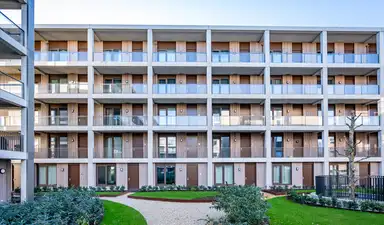
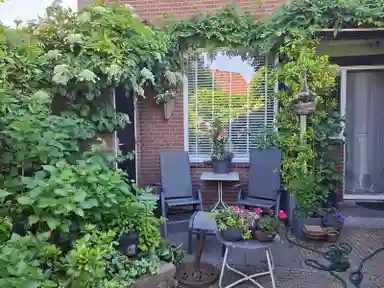
Nieuwegein at €1,409/month: the Utrecht trade-off
Nieuwegein sits 10 kilometres south of Utrecht, separated from the city by the Amsterdam-Rhine Canal and connected by tram line 60 and several bus routes. That proximity is exactly why people rent here: based on over 2,900 listings tracked in Nieuwegein on RentHunter, the average rent lands at €1,409/month across all accommodation types, roughly 17% below Utrecht's average of €1,720. For a two-bedroom apartment that gap can mean €200–€300 saved each month.
What surprises most newcomers is how quickly Nieuwegein reads as suburban rather than urban. The city was built largely from the 1970s onward on land carved out of the Utrecht municipality, so the streetscape is planned: wide roads, plenty of parking (40% of tracked listings include a parking space), low-rise apartment blocks alternating with terraced houses, and shopping concentrated around the Cityplaza mall. If you arrive expecting a historic centre, you won't find one. If you arrive expecting affordable space near Utrecht, you'll leave satisfied.
Save €300/month, spend 30 min each way
The arithmetic is straightforward. Utrecht's average rent sits at €1,720/month; Nieuwegein's is €1,409. That's €311 cheaper per month, or roughly €3,700 over a year. The cost you pay is a 30-minute transit connection to Utrecht Centraal via tram 60, which runs frequently throughout the day. For anyone working in Utrecht three days a week, the monthly travel cost increase is modest compared to the rent saving.
This trade-off makes the most practical sense for young couples saving toward a first home purchase, families who need 100+ m² of space (houses here average 128 m²) and cannot afford Utrecht prices, and remote workers who commute two or three days a week rather than five. It makes less sense if your office is in Amsterdam or Rotterdam rather than Utrecht, since Nieuwegein's transit connections to those cities add 60+ minutes each way. Run those numbers before signing a lease.
One thing that trips up renters new to the area: Nieuwegein has no train station of its own. The tram network (lines 60 and 61, connecting via Nieuwegein-City and Nieuwegein-Zuid stops) feeds into Utrecht's rail hub. Plan your commute around tram schedules, not train timetables. Bikes are useful for reaching tram stops in the residential districts.
Nieuwegein's housing stock: apartments dominate at 77%
Nieuwegein's rental market is almost entirely composed of apartments and houses, with very few rooms relative to a university city. That reflects its renter profile: this is a city of working households and families, not students sharing kitchens. The average rented surface is 85 m², more generous than you'd find in central Utrecht for the same price.
Apartments (77% of market, avg €1,427)
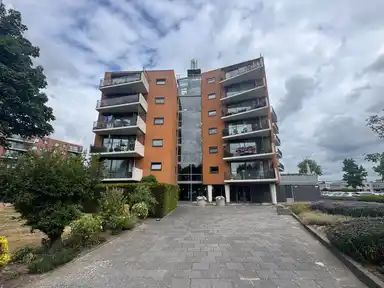
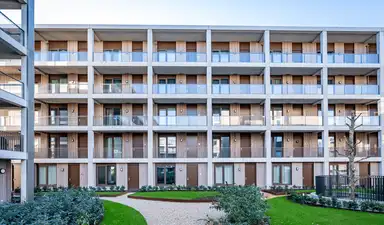
With 2,259 tracked listings averaging €1,427/month and 90 m², apartments are the clear backbone of renting in Nieuwegein. Most of the stock is found in the planned residential blocks around Nieuwegein-City, Jutphaas, and along the Merwedekanaalzone. Balconies are common (35% of all listings include one), though private gardens are rare at 14%. Furnished options represent 32% of listings, useful for expats on fixed-term contracts. Browse apartments in Nieuwegein to compare current availability across the city.
Houses: space at a premium, avg €2,181
Houses make up 10% of the market (280 tracked listings) and average €2,181/month at 128 m². Most are terraced houses in family-oriented neighborhoods like Jutphaas-Wijkersloot and Galecop, with front and rear gardens. This segment skews toward families relocating from Utrecht who need bedroom count and outdoor space that apartments simply cannot provide. Houses for rent in Nieuwegein are the most competitive listings in the family segment; they tend to move faster than apartments at the same price bracket.
Studios and rooms: a thin market
Studios account for just 3% of tracked listings (82 units), averaging €1,246/month at 38 m², while rooms cover 11% (313 listings) at an average €656/month. The room supply is low compared to Leiden or Delft; only 6% of Nieuwegein listings are student-targeted. Studios in Nieuwegein suit solo professionals who want independence without paying apartment-level rent, and rooms in Nieuwegein can work for budget-conscious individuals, though options are limited and turnover is slower than in university towns.
Where to rent in Nieuwegein: four residential areas
- Nieuwegein-City: tram-stop convenience The most transit-connected part of Nieuwegein, built around the Cityplaza shopping mall and the eponymous tram stop on line 60. Apartments here are primarily 1970s–1980s construction, slightly older stock, but the walking distance to tram and the presence of supermarkets, the library, and weekly market on the Koningin Julianaplein make it the most practical base for car-free commuters. Good for singles and couples who prioritize transit access over space.
- Jutphaas-Wijkersloot: family terraces near the Lek One of Nieuwegein's older areas, incorporating the historic village of Jutphaas along the river Lek. The housing stock here mixes pre-war terraces in the old village core with post-war expansion streets. It's the neighborhood that feels most like 'a real town' rather than a planned development. Houses are larger on average and gardens are more common. Multiple primary schools are within cycling distance, and the Lekdijk offers flat cycling paths toward Utrecht.
- Galecop and Batau: 1980s low-rise, car-dependent These western neighborhoods were developed primarily in the 1980s and reflect the planning priorities of that era: spacious street layouts, ample parking, and a mix of owner-occupied and rental housing in low-rise blocks and semi-detached houses. Rental stock here tends to be well-priced for the size you get. The downside is limited direct transit; most residents here drive or cycle to the tram. Galecop borders the A27 motorway, which gives fast car access to Utrecht and the A2 corridor.
- Laagraven-Cammingha: new build near the canal Located near the Amsterdam-Rhine Canal in the northern part of Nieuwegein, this area contains some of the newer residential developments and industrial-to-residential conversions. Rents here trend slightly above the Nieuwegein average due to newer build quality, but you gain better cycling connectivity toward Utrecht via the canalside bike paths. Suitable for couples or young professionals who want newer construction without paying Utrecht prices.
Commuting from Nieuwegein
Nieuwegein's transit relies on tram lines 60 and 61 feeding into Utrecht's central rail network. The city has no direct train station, so all long-distance commuting runs through Utrecht Centraal. This shapes everything: Utrecht is fast, but reaching Amsterdam or Rotterdam requires a transfer and adds significant time.
Utrecht Centraal (~30 min): the core connection
Tram line 60 connects Nieuwegein directly to Utrecht Centraal in approximately 30 minutes. For anyone working at one of Utrecht's large employers (UMC Utrecht, Rabobank, or the university campuses), this is a daily 30-minute single-leg commute, manageable even at five days per week. Trams run at high frequency during peak hours. Renting in Utrecht remains an option if you want to eliminate that commute, but you'll pay around €311 more per month on average for the privilege.
Amsterdam (~65 min): viable for hybrid workers
Transit from Nieuwegein to Amsterdam runs via Utrecht Centraal, adding a transfer and totalling around 65 minutes each way. Five days a week this becomes over two hours of daily travel, which most people find unsustainable. Two or three days per week is realistic. For comparison, renting in Amstelveen cuts Amsterdam commuting time significantly if Amsterdam is your permanent workplace. Run the math on rail pass costs if you're seriously considering this route.
Almere as an alternative (~comparable distance)
If you're weighing commuter-town options across the Utrecht–Amsterdam corridor, Almere is worth a parallel search. It sits on the Amsterdam side of the corridor rather than the Utrecht side, so its commute math is different. Neither city is objectively better; the right choice depends entirely on where you work. Running a search on both helps you compare what your budget gets you in each location.
Dal-uren pass: the commuter discount worth knowing
NS offers a dal-uren (off-peak hours) discount subscription that reduces train fares by 40% outside morning and evening rush hours. For anyone commuting from Nieuwegein with a flexible start time, shifting your Utrecht departure by 30–60 minutes past 09:00 triggers this discount. Over a month of Utrecht commuting, that saving can be €40–€80 depending on your route. Check the NS website for current subscription options.
Frequently asked questions about renting in Nieuwegein
How does Nieuwegein's rental market compare to Utrecht?
Based on over 2,900 historic listings tracked in Nieuwegein, the city averages €1,409/month across all accommodation types, compared to Utrecht's average of approximately €1,720. That's a 17% gap. The trade-off is the 30-minute tram commute via line 60. You also get more space: average rental surface in Nieuwegein is 85 m², which is larger than typical Utrecht city-center rentals in the same price bracket.
Is parking included in Nieuwegein rentals?
Nieuwegein is car-friendly by Dutch standards: 40% of tracked listings include a parking space, which is higher than you'd typically find in Utrecht's city center. Most apartments in planned neighborhoods like Galecop and Batau come with at least one parking spot, either underground or in a designated parking area. When browsing listings, always check whether the parking space is included in the advertised rent or charged separately, as some landlords list it as an add-on.
Can I register at the gemeente (BRP) when renting in Nieuwegein?
Yes, 75% of tracked listings in Nieuwegein permit municipal registration (BRP inschrijving). This is an important filter if you need to register for DigiD, a Dutch bank account, or healthcare. The 25% of listings that do not allow registration are typically short-term or expat-targeted furnished units. Always confirm registration rights explicitly with the landlord before signing, as the contract must state it.
Is the commute from Nieuwegein to Utrecht actually worth it?
For Utrecht workers, the math generally works. You save approximately €311/month on rent and spend an extra 30 minutes each way in transit. If you value your time at Dutch minimum wage, 22 working days of 60 extra minutes costs roughly €200–€220 in time. The net saving is still over €90/month, and you're getting more space (85 m² average vs typical smaller Utrecht units at similar prices). The calculus shifts if you commute all five days and strongly dislike public transit. For hybrid workers doing three days, the trade-off is clear.
What is the average deposit when renting in Nieuwegein?
The average deposit in Nieuwegein is 1.21 months' rent, based on tracked listings. At the city average rent of €1,409, expect to set aside roughly €1,700 upfront for deposit alone, plus first month's rent. For houses averaging €2,181/month, the upfront cost is closer to €2,600 for deposit. Budget these figures into your moving cost calculation; they are on top of any agency fees or administration costs the landlord may charge.