Apartments, rooms and studios for rent in Sittard Geleen

Stop refreshing, get daily matches

Stop refreshing, get daily matches
Sittard-Geleen: affordable Limburg renting, honestly assessed
Sittard-Geleen sits at a crossroads that most people outside Limburg overlook. It is the largest municipality in the province by population after Maastricht, built from the 2001 merger of two distinct towns: Sittard, with its medieval market square and the Basilica of Our Lady, and Geleen, the former industrial core shaped by the DSM chemical complex that still anchors employment in the region today. The result is a dual-centre municipality where your choice of neighbourhood genuinely determines your daily rhythm, not just your commute.
Imagine cycling in ten minutes from a terrace house near the Markt in Sittard to the Saturday market, picking up vlaai from one of the Limburgse bakeries. That kind of everyday geography shapes why people choose to rent here rather than commute from Maastricht or Roermond. The rental offer reflects this: a mix of post-war family homes around Geleen-Noord, more compact apartments near Sittard station, and a growing number of renovated units aimed at professionals who work in the Chemelot industrial site or at Zuyderland hospital.
For anyone searching 'huren in Sittard-Geleen', RentHunter aggregates listings across all accommodation types in one place, so you can compare the full market without checking each platform separately.
Sittard-Geleen prices: what the market actually shows
Sittard-Geleen is one of the more affordable rental markets in the southern Netherlands, a meaningful fact in a country where national averages are pushed up by Randstad cities. The rental stock here leans toward houses rather than apartments, which is unusual for a Dutch municipality of this size, and reflects the post-war residential expansion around Geleen that produced row upon row of eengezinswoningen.
The market covers the full spectrum from rooms for students or young workers, through studios and small apartments near the station, to full family houses in quieter residential streets around Lindenheuvel or Graetheide. Prospective tenants who have been searching in Maastricht and found prices out of reach often end up in Sittard-Geleen as a practical alternative with faster train access to Eindhoven than many expect.
One local signal worth knowing: service costs (servicekosten) vary more here than in student cities. Many older properties around Geleen charge lower base rent but include heating and water in a flat service fee. Always confirm what is included before comparing asking prices across listings.
Houses, apartments, studios: how the stock breaks down
Sittard-Geleen's rental stock is defined by its post-industrial residential character. Houses dominate in a way you don't see in Amsterdam or Utrecht, a legacy of the worker-housing programmes built for DSM employees from the 1950s through the 1980s. Apartments and studios fill the gaps near transport nodes, while rooms represent a small but real slice of the market, fed by students at Zuyd Hogeschool and young professionals arriving for the first time.
Houses: the dominant rental type
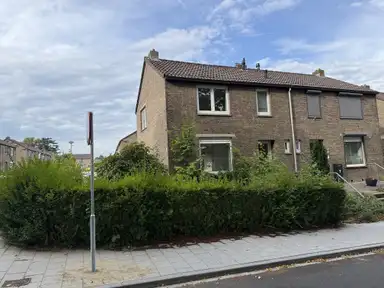
Imagine settling into a 1960s rijtjeshuis in Geleen-Oost, a garden in the back, a shed, and a parking spot on the street. That is the most common rental scenario in Sittard-Geleen, and it is what sets the municipality apart from most Dutch cities of comparable size. Row houses and semi-detached homes for families or couples make up a large share of the total stock. Houses for rent in Sittard-Geleen are particularly attractive to families relocating from more expensive southern cities or professionals at Chemelot who want proper space without Maastricht-level prices.
Apartments near Sittard station
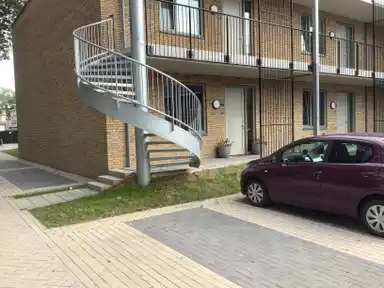
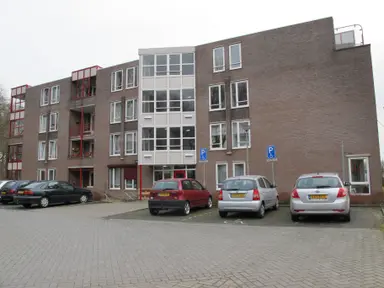
The area around Sittard station and the historic Markt is where the apartment offer concentrates. These tend to be two- or three-room units, often in buildings from the 1970s and 1980s, some recently modernised. Newer construction has appeared along the edges of the centre over the past decade, bringing more energy-efficient options. Commuters favour this pocket because the train to Eindhoven and the connection south to Maastricht both run from Sittard station. Apartments in Sittard-Geleen in this corridor typically attract single professionals and couples without children.
Studios: compact options for solo renters
Studios in Sittard-Geleen are a limited but steady slice of the market, mostly found in the Sittard centre and along the main connecting roads between the two town cores. They suit single newcomers arriving for a work contract at one of the regional employers: healthcare at Zuyderland, logistics, or the service sector. If you want self-contained living without committing to a full apartment, studios in Sittard-Geleen are worth monitoring as turnover tends to be moderate and availability can shift quickly.
Rooms: small supply, clear demand
The room market in Sittard-Geleen is smaller than you'd find in a dedicated student city, but it exists. Students at Zuyd Hogeschool (which has a campus in Sittard) and young workers on short contracts look for shared housing, and the offer of rooms in Sittard-Geleen is spread across the older residential quarters of both town centres. Competition is moderate compared to Maastricht or Nijmegen, but availability is limited. Checking listings regularly gives you a clear edge.
Where to rent in Sittard-Geleen: three distinct zones
The municipality is not one town with suburbs. It is a string of residential zones built around two historical cores and an industrial belt. That geography means your choice of neighbourhood has real practical consequences for daily life.
Sittard centre: near the Markt, walkable daily life
Imagine finishing work and stopping at the weekly market on the Markt in Sittard on your way home, then reaching your apartment in five minutes on foot. The historic centre of Sittard is compact, walkable, and the most urban part of the municipality. Apartments and a handful of studios are the typical offering here. The area suits people who value neighbourhood character over garden space. Proximity to the station makes it a practical base for those who commute toward Eindhoven or Maastricht. Rents in this pocket run higher than in the outer residential quarters, but you pay for convenience.
Geleen-Noord and Lutterade: post-war terraces, family scale
Much of the rental offer around Geleen consists of terraced houses built between the 1950s and 1970s in areas like Geleen-Noord and Lutterade. These were originally worker housing, and many remain corporatie (social housing corporation) properties that occasionally appear on the private rental market when contracts change. Imagine coming home to a quiet street in Lutterade after a shift at Chemelot, the kids cycling to school a few blocks away. That suburban calm is the selling point. The downside: car ownership matters here, and public transport is limited outside peak hours.
Lindenheuvel: quieter residential, larger homes
Lindenheuvel is one of the calmer residential pockets of the municipality, with more detached and semi-detached housing than you find near the old Geleen industrial core. Families with school-age children are the dominant renter profile here. The area is green, relatively quiet, and within cycling distance of Sittard centre for those who prefer not to drive. Rentals tend to be larger floor plans at competitive prices. It appeals to people who have left Maastricht for affordability reasons but still want a proper house with outdoor space.
If you are open to a furnished apartment for a shorter contract, check furnished apartments in Sittard-Geleen. These suit expats at Chemelot or Zuyderland who arrive for 6–12 month assignments and want to avoid sourcing furniture. Availability is limited but does appear, especially at the start of Q1 and Q3.
Commuting from Sittard-Geleen
Sittard station sits on the main rail line connecting southern Limburg to the national network. Direct trains run toward Eindhoven in the north and toward Maastricht in the south, and from there onward to Liège and Brussels. For people employed in the wider Euregion (the Dutch–Belgian–German border triangle), Sittard-Geleen's position can save considerably on rent compared to renting in Maastricht or closer to Eindhoven, provided you factor in the extra travel time honestly.
Eindhoven (~76 min): tech hub within reach
At around 76 minutes by public transit, Eindhoven is reachable from Sittard but represents a long daily commute in both directions. For those working at the High Tech Campus or ASML who cannot find affordable housing near Eindhoven, Sittard-Geleen offers a rent differential that can make the journey worthwhile financially. Realistically, this works better for three- or four-day working weeks than a five-day grind.
Maastricht (~30 min): the obvious nearby option
Maastricht is just under 30 minutes by direct train from Sittard station, the closest major city and the reference point most people use when comparing rental markets in South Limburg. Those who work or study in Maastricht but find its rental prices high often investigate Sittard-Geleen as the realistic commuting alternative. The journey is short enough to be done daily without strain, which is the core reason why some tenants actively choose Sittard-Geleen and commute in, rather than the other way around.
Tilburg and beyond: long-distance trade-offs
Connections to Tilburg, Utrecht, Rotterdam, and Amsterdam require changes and add significant time. Utrecht sits around 126 minutes away, Amsterdam around 156 minutes. These distances make Sittard-Geleen a poor fit for people whose employment is firmly in the Randstad. However, for those who work remotely two or three days a week and only occasionally need to reach the west, the rent savings in Sittard-Geleen versus Randstad cities are dramatic enough to justify the trade-off.
NS dal-urentarief (off-peak discount) applies on trains from Sittard. If your working hours allow you to travel before 06:30 or after 09:00 in the morning, and return before 16:00 or after 18:30, you cut the ticket price substantially. For regular commuters toward Eindhoven or Maastricht, an NS Business Card or annual subscription can cut costs further. Check current NS tarieven before signing a rental contract that forces a long commute.
Questions renters ask about Sittard-Geleen
Is the Sittard-Geleen rental market competitive or easy to enter?
Compared to Maastricht or Eindhoven, the Sittard-Geleen rental market is notably less pressured. Response times from landlords tend to be longer, viewing appointments are easier to arrange, and you are rarely competing against 30 other applicants for a single listing. That said, well-priced houses with gardens in the Geleen residential areas still move quickly, and the total volume of listings is smaller than in larger cities, so setting alerts and responding promptly still matters.
Are there enough rental options for expats arriving at Chemelot or Zuyderland?
The expat rental market in Sittard-Geleen is smaller than in Eindhoven or Amsterdam but does exist. Both Chemelot and Zuyderland have international staff, and landlords near the Sittard centre are increasingly familiar with expat tenancy needs. Furnished short-stay options are limited but available. If you are arriving for a contract of six months or more and need a furnished unit quickly, starting your search at least 6–8 weeks before arrival is advisable. English-language listings are available but not dominant.
Does it matter whether I rent in Sittard or in Geleen?
In practical terms, yes. Sittard offers a more urban experience with walkable amenities, a well-connected train station, and stronger apartment and studio supply. Geleen has more family housing, a more residential feel, and was historically the industrial centre. If you commute by train, living close to Sittard station reduces your travel to the platform. If you drive to Chemelot or need a larger house, Geleen or the areas between the two centres often give you better value per square metre. The two cores are about 5 km apart, linked by regular bus service.
How does Sittard-Geleen compare to renting in Maastricht?
Maastricht's rental market is more expensive and more competitive, driven by university demand and international appeal. Sittard-Geleen is quieter and generally more affordable, especially for family houses. The trade-off is urban amenity: Maastricht has a denser city centre with more restaurants, cultural facilities, and international networks. For anyone employed regionally, particularly at Chemelot or in the broader South Limburg employment zone, Sittard-Geleen's lower rent can offset the reduced city-centre buzz. Both markets are covered on RentHunter if you want to compare active listings side by side.